Battery energy storage projects can fit in the Adirondack Park
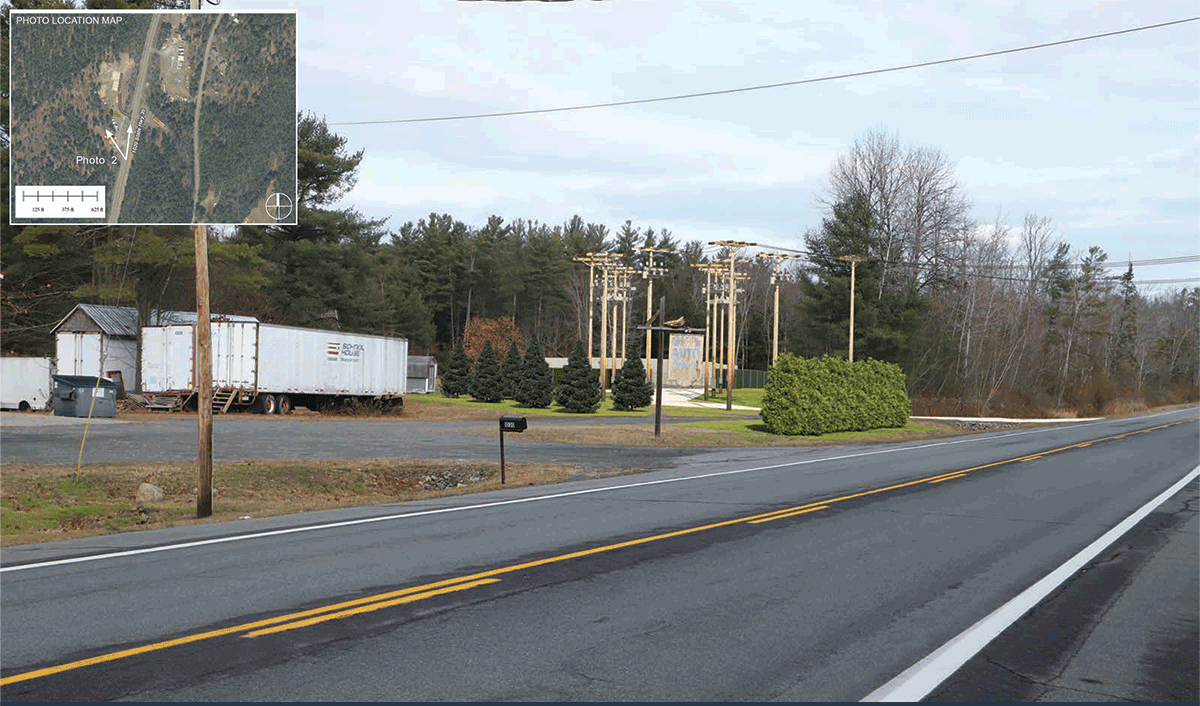
The idea that battery energy projects must be entirely excluded from the Adirondack Park ignores the benefits that they provide and the fact that we have many private infrastructure projects that support the people and businesses located throughout the Park. We already have private gas stations, fuel depot businesses, and electrical substations that support the residents and businesses located throughout the Park.
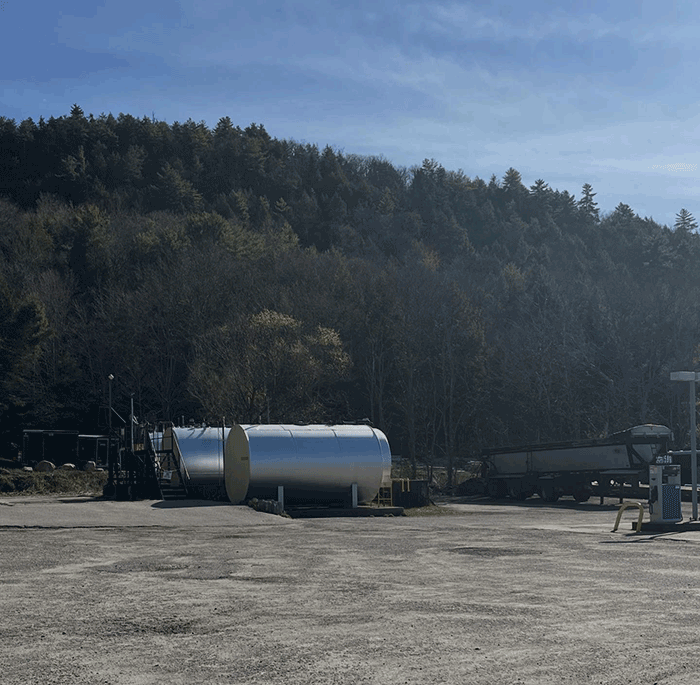
An example of an existing energy storage facility located in the Adirondack Park
Battery projects store energy and add it to the grid for people here in the Park to use when it’s most needed. They can provide electricity when demand is higher than energy production or when there’s a problem in the grid preventing the usual flow of electricity. They can slow rising electricity costs by reducing use of inefficient, expensive “peaker” power plants.
Peaker plants are mostly unused but maintained in a ready state year-round, then ramped up when energy supplies fall short of demand. Most of NY State’s peaker plants run on costly, polluting fossil fuels. Quick ramp-up means pollution controls do not capture air pollutants as effectively. For people nearby, that means higher rates of asthma and other respiratory illnesses; for the North Country, it worsens climate changes that already hurt our business and Adirondackers.
The battery storage projects are on private property, not on State Forest Preserve lands that are protected by Article 14 of the New York State Constitution. To be clear, it would not be legal, and we do not support, the siting of renewable energy projects or battery projects on State-owned, Constitutionally protected Forest Preserve lands. Projects located on private lands in the Park are regulated by the Adirondack Park Agency and/or local governments. A slew of extractive businesses operate on private lands in the Park (e.g., mines), as well as any number of other commercial projects.
There are legitimate concerns that should be addressed including training for volunteer firefighters, which is now required by the updated State Fire Code standards that went into effect on January 1, 2026. Towns and local residents should have their questions answered and local restrictions that get enacted should be respected by the private companies seeking to site these projects in the Park. There may also be completely inappropriate locations where these facilities should not be sited due to environmental or community concerns. That said, we do not believe that a whole scale exclusion of battery projects in the Park is warranted.
Below we address some common concerns about battery energy storage systems (BESS) on private land (which is not subject to the Forever Wild clause that applies to State-owned Forest Preserve) in the Park:
- Fire risk is low.
- While high-profile in the news, battery fire incidents are rare. All energy infrastructure comes with inherent risk. The ratio of incidents reported to BESS capacity deployed has declined significantly due to improved system design and new, broadly applicable safety standards designed to reduce risk.
- BESS can store any type of electricity and do not have to be associated with huge solar projects or AI data centers.
- BESS can store any type of electricity and the energy that it distributes can be used for a variety of energy needs. A BESS does not mean a data center is also going to be developed. The type of energy that is stored in BESS depends on the local generation mix at the time of charging (in the Park, much of our energy is produced by hydroelectric power).
- Studies of BESS fires have not found adverse impacts to air, soil, or water.
- Studies show battery storage fires results in emissions similar to a house or building fire. Analysis of soil, water and air quality after battery fires in New York found that there were no harmful levels of toxins detected. A more recent environmental review of soil, water, and air at a battery storage fire in the Village of Warwick NY found no adverse environmental impacts (notably, that facility was built before the current Fire Code and was operating without a valid Certificate of Compliance). Fossil fuel plants, which emit fumes by design whenever in operation, are of greater concern to human health and safety.
- A battery storage fire would not require evacuation of residents.
- Safety experts do NOT recommend evacuations in response to a battery storage fire. Instead, the same precautions are taken as for a structure fire, with residents advised to avoid smoke inhalation or shelter in place, depending on the severity of the event.
- Battery energy storage systems should have appropriate setbacks and visual protections.
- Battery storage projects need to comply with current safety regulations, should be located on a concrete or gravel surface, and should be sited with a sufficient setback distance from property lines (e.g., at least 50 feet), existing vegetation, sensitive environmental areas (e.g., at least 100 feet from wetlands), and all other structures (e.g., at least 250 feet). The projects should also be screened with fencing and landscaping to protect against visual impacts resulting from the infrastructure related to BESS.
- Volunteer firefighters are trained and prepared to respond to a battery fire.
- All BESS are required to have emergency response plans and annual training must be offered to local fire departments. Hazard Support Personnel provided by the BESS developer must be en route to an incident within 15 minutes and arrive on site within 4 hours. Battery fires don’t require special equipment, apart from standard hazmat emergency response tools.
- These systems are useful to Adirondack communities because they store energy and provide it to the local grid.
- Demand for energy is steadily growing and that will require new sources of energy everywhere, including in the Adirondacks. BESS are needed for resilience, grid stability, elimination of peaker plants, and for the integration of renewable energy locally.
The information on this page was compiled in part from NYSERDA’s Energy Storage Guidebook available at: https://www.nyserda.ny.gov/All-Programs/Clean-Energy-Siting-Resources.
More information is available in the Adirondack Explorer’s article “Battery energy storage systems: Your questions answered”.