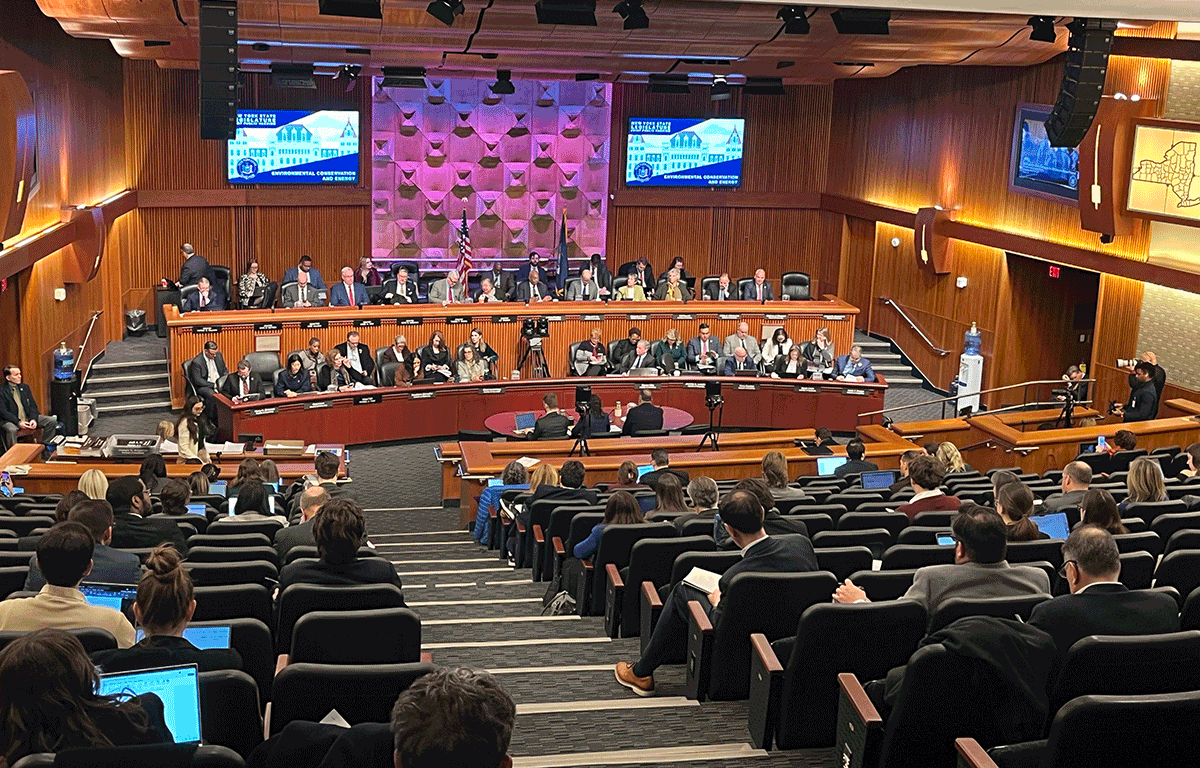
Executive Budget Proposed by Governor Kathy Hochul Includes Important New Constitutional Amendment for Closed Prisons but Shortchanges Funding for Pillar Adirondack Programs
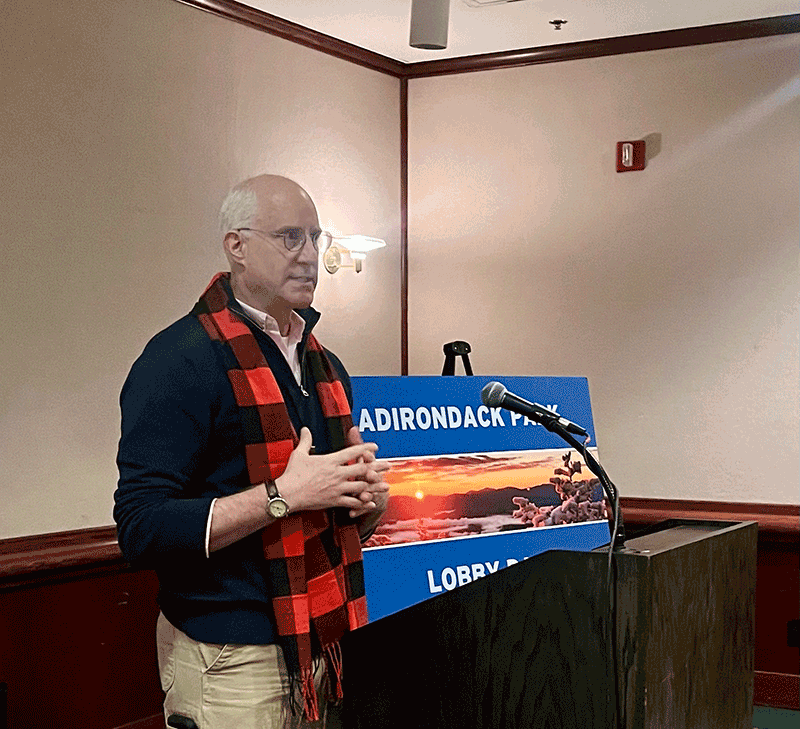
The FY27 Executive Budget proposed by Governor Kathy Hochul includes funding for many programs and initiatives for the Adirondacks, but some have not been funded at the levels that they were in the last fiscal year budget. Protect the Adirondacks, Inc. (PROTECT) joined with several other Adirondacks organizations in requesting funding for important Adirondacks programs and initiatives throughout the Adirondack Park. Our letter to the Governor is here. The Governor’s proposed Executive Budget met our requests for many, but some of the existing programs were underfunded or not funded at all. PROTECT is urging the Legislature to restore funding for Adirondack programs that were reduced or eliminated from the Governor proposed budget. A copy of our Budget testimony to the Legislature is available here. Join us for Adirondack Park Lobby Day on Monday February 23, 2026 to advocate for Adirondack Park funding! Register here!
Constitutional Amendment for Closed Correctional Facilities
A constitutional amendment is required to lawfully allow the redevelopment and repurposing of closed correctional facilities located on Forest Preserve lands owned by the State. PROTECT supports Governor Hochul’s proposal for a constitutional amendment to repurpose three closed correctional facilities: Camp Gabriels in Franklin County, Mount McGregor in Saratoga County, and Moriah Shock in Essex County. These facilities include hundreds of buildings and an assortment of existing, but mostly neglected, infrastructure such as roads, electricity and water/wastewater systems.
Significant groundwork and dialogue have already taken place that position these three facilities to move through the amendment process. A constitutional amendment removing these facilities from the Forest Preserve is needed to allow them to be redeveloped and revitalized to benefit the local communities where they are sited. Mount McGregor is located in Saratoga County, one of the fastest growing counties in the state, and Moriah Shock functioned like an educational campus that can be readapted. The location of Camp Gabriels in the Tri-Lakes area of the Adirondacks, arguably the most dynamic neighborhood in the Adirondack Park, also holds promise. These facilities could be put towards a number of different public uses from housing to small business space to non-profit space.
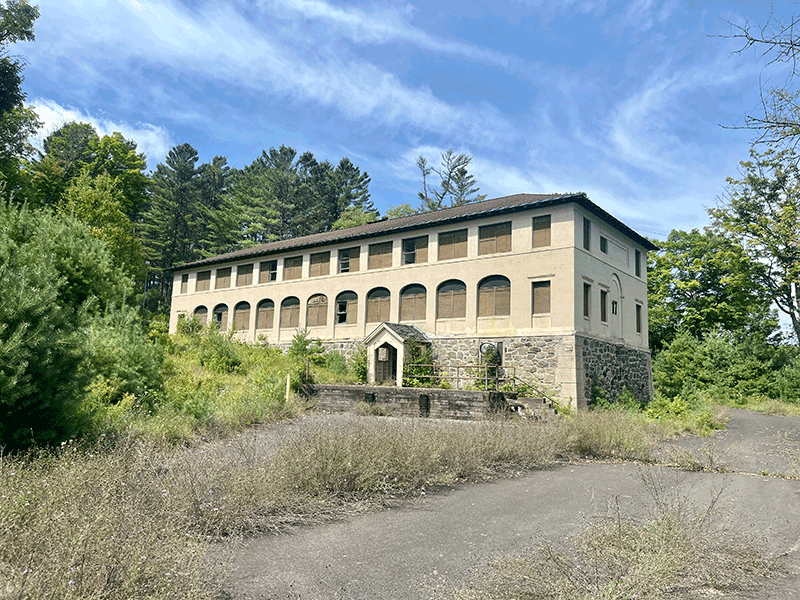
A building at the Camp Gabriels Correctional Facility that sits abandoned on the Forest Preserve
A constitutional amendment must include a provision, as Governor Hochul’s proposal does, to compensate for the removal of developed Forest Preserve lands by adding new undeveloped, wild forest lands to the Forest Preserve. Governor Hochul proposes adding 1,500 acres as compensation lands, but we urge the Legislature to increase that acreage to at least 2,500 acres. We saw in November 2025 that the voters only narrowly approved a constitutional amendment for the Mount Van Hoevenberg Winter Olympic Sports Complex to bring its facilities into alignment with the constitution. That amendment authorized the use of up to 323 acres of land for winter sports activities and infrastructure that would remain in State ownership. In exchange for allowing those lands to be used as part of the winter sports complex, the amendment provides that 2,500 acres of new wild lands will be added to the Adirondack Forest Preserve.
Here, the proposed amendment would allow 243 acres of land to be completely removed from the Forest Preserve. There is not an exact formula for calculating the acreage of the compensation lands, but what the Forest Preserve gains needs to be sufficiently large enough to persuasively demonstrate to the voters that the amendment provides an overall net benefit to the Forest Preserve and to the people of the State. Accordingly, for this amendment to have a greater chance of success getting statewide voter approval there needs to be a higher amount of compensation lands. We believe that amount should be at least 2,500 acres.
Environmental Protection Fund
The Environmental Protection Fund (EPF) is the main source of funding for stewardship of public lands within the Adirondack Park and for the environmentally sound economic development of communities in the Park. We are pleased that Governor Kathy Hochul’s proposes budget includes $425 million for the EPF. However, the need for these funds to address the increasingly serious environmental challenges facing the State and the increased costs of responding to those challenges exceeds this amount. Accordingly, Protect is urging the Governor and Legislature to strive to increase EPF funding to $500 million in the near future.
EPF Open Space and Land Acquisition
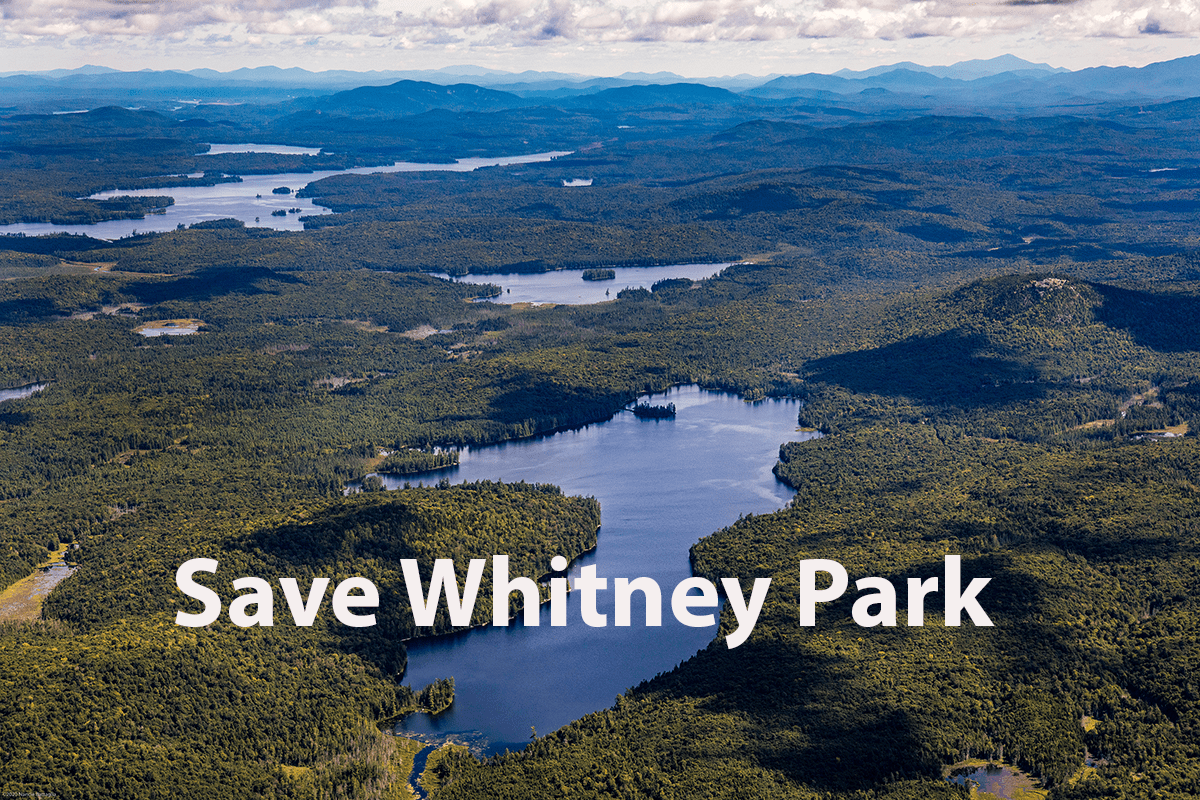
In 2022 the Legislature passed and Governor Hochul signed the landmark “30 by 30” law, which commits the State to protecting 30% of the State’s lands and inland waters by 2030. PROTECT issued a report that documented all currently protected lands in the State and concluded that the State will need to protect approximately 3 million additional acres to meet the statutory goal. Additional funding for open space protection is necessary to acquire and preserve the millions of acres of lands and waters of the State needed reach the 30 by 30 goal and protect priority lands such as the 36,000-acre Whitney Park property in the heart of the Adirondacks. The Executive Budget’s EPF funding for Open Space and Land Conservation proposes $42 million.
PROTECT is urging the Legislature to increase EPF funding for Open Space and Land Acquisition to $50 million.
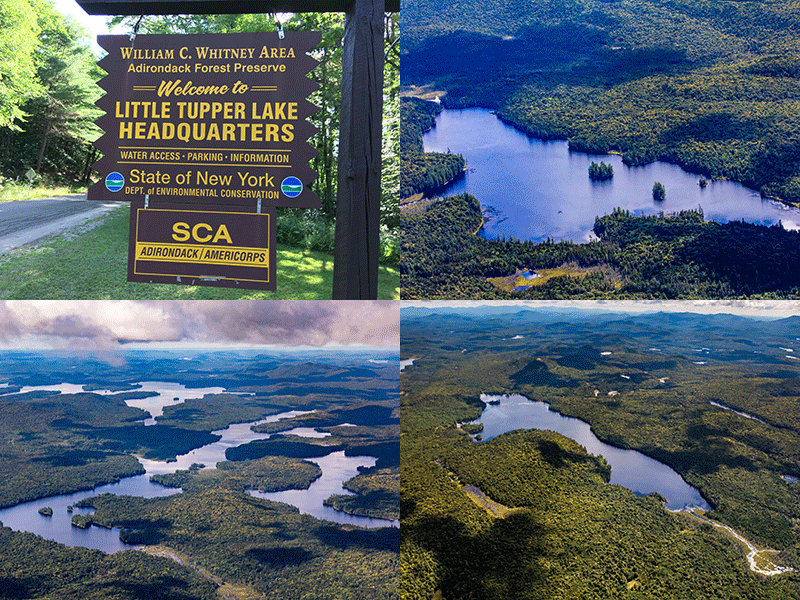
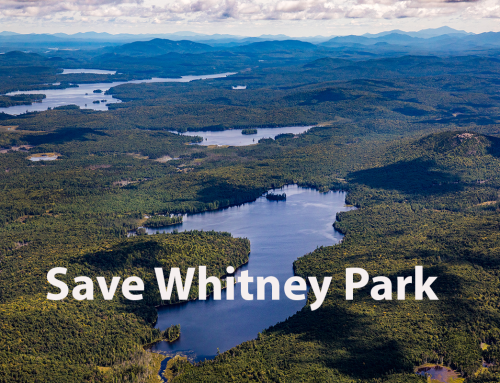
EPF funds for State Land Acquitision could be used to purchase the Whitney Park property
EPF State Land Stewardship
The State Land Stewardship line in the EPF provides funds for the management and protection of millions of acres of State-owned lands, including the nearly 3 million acres of Forest Preserve lands in the Adirondack Park. The Executive Budget proposes $8 million in funding specifically for Adirondack and Catskill visitor safety and wilderness protection. That funding is very welcome and we urge the Legislature to increase it to $10 million for the Adirondacks and Catskills.
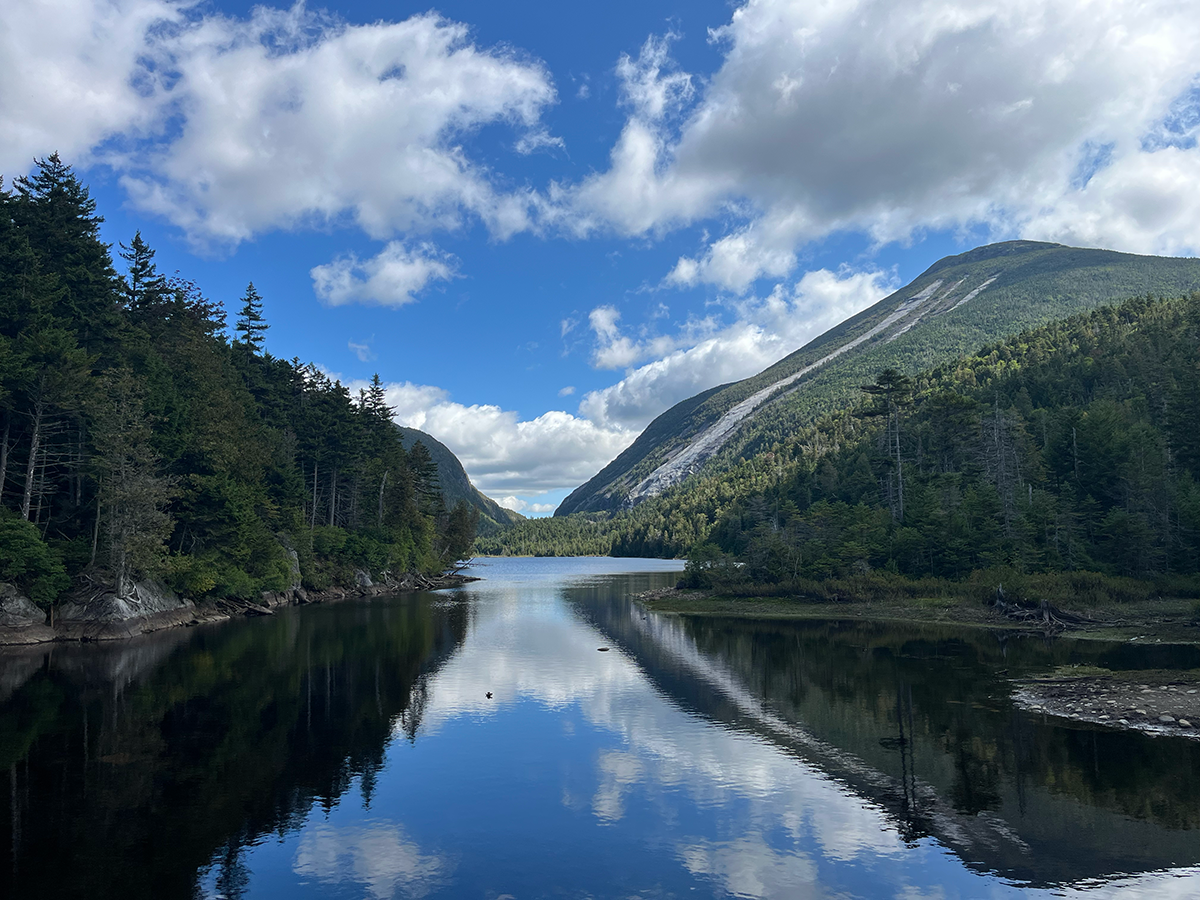
In last year’s State Budget, $1 million was earmarked to fund a carrying capacity study of sensitive water bodies in the Adirondack Park. “Carrying capacity” means the ability of natural resources to withstand and sustain human activity and the environmental impacts resulting from those activities. In the case of waterbodies it means the impacts on water quality, fish and wildlife, scenic and aesthetic resources, and the user experience resulting from increasing boat traffic and conflicting visitor use. A carrying capacity study would examine these factors, evaluate whether and to what extent the carrying capacity has been exceeded, and recommend measures to avoid exceeding the carrying capacity and/or to return resources to an acceptable level that does not exceed the carrying capacity. Although the Adirondack Park State Land Master Plan requires the Department of Environmental Conservation (DEC) to conduct a carrying capacity study for each unit of Forest Preserve lands and waters in the Park, DEC has thus far failed to complete even one such study, citing budgetary constraints. However, despite being allocated $1 million to undertake the study in FY26, DEC did not use those funds. The Governor’s proposed budget has reallocated the $1 million to be used in FY27 and we urge the Legislature to keep that reallocation.
PROTECT is urging the Legislature to include $50.6 million in the EPF funding for State Land Stewardship, including $10 million overall for Adirondack and Catskill visitor safety and wilderness protection and the reallocation of the $1 million for a carrying capacity study of water bodies in the Adirondack Park.
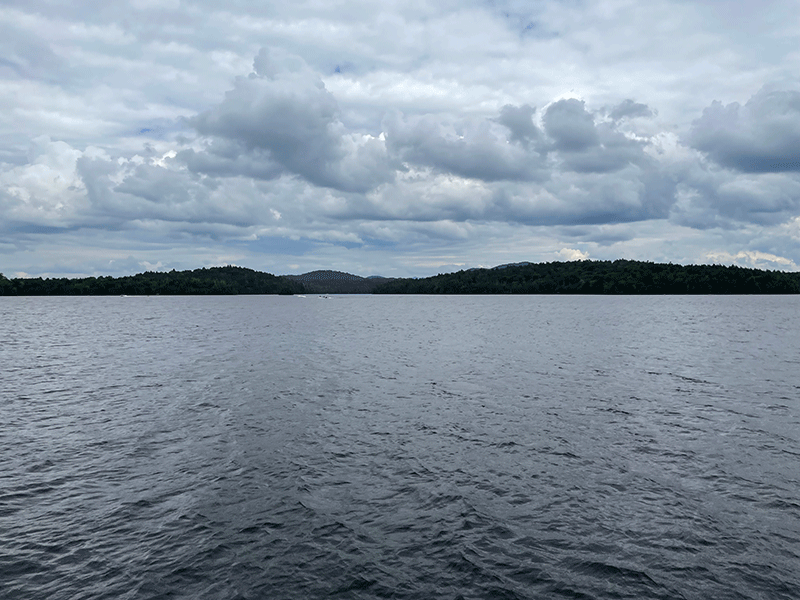
$1 million has been allocated to DEC, but not yet used, for a carrying capacity study of water bodies in the Adirondack Park
EPF Visitor Center Funding
We support funding Visitor Centers with $250,000 each for Paul Smith’s Visitor Interpretative Center (VIC), the SUNY Environmental Science and Forestry (ESF) Adirondack Interpretative Center (AIC), and the ADK High Peaks Information Center. The Executive Budget proposes to eliminate the prior funding of $250,000 for the ADK High Peaks Information Center.
PROTECT is urging the Legislature to restore the EPF funding ($250,000) for the ADK High Peaks Information Center.
EPF Diversity Funding for the Adirondacks
The Executive Budget includes $1.25 million for the Timbuctoo Institute. The Timbuctoo Institute is a program developed by the SUNY College of Environmental Science and Forestry (ESF) to introduce high school sophomores and juniors from New York City to climate science, provide career counseling, and address issues of access from an equity and justice perspective. In 2023, the Institute partnered with CUNY Medgar Evers College to bring 48 high school students to the Adirondacks for three two-week sessions. In 2024, 46 students from all five New York City Boroughs attended the program. In the summer of 2025, 131 students from all five New York City Boroughs participated in the program. We support funding this program and are urging that it be increased to $2.1 million.
The Adirondack Diversity Initiative (ADI) works to make the Adirondacks a more welcoming and inclusive place for residents and visitors while ensuring a vital and sustainable Adirondack Park for future generations. ADI addresses a broad range of diversity issues, such as race and ethnicity, gender and gender identity, sexual orientation, and socioeconomic status, across 14 counties. We support funding of at least $420,000, with a goal to increase that funding as ADI continues to grow its program’s impacts and effectiveness.
We also support State funding for a planned new exhibit on the African-American Experience in the Adirondacks at the Adirondack Experience (formerly the Adirondack Museum) in Blue Mountain Lake. The African-American Experience in the Adirondacks, set to open in 2027, will be a major permanent exhibition dedicated to the untold story of African Americans and their experiences, past and present, in the Adirondacks. Funding for this project is being sought from grants outside of this year’s State budget process.
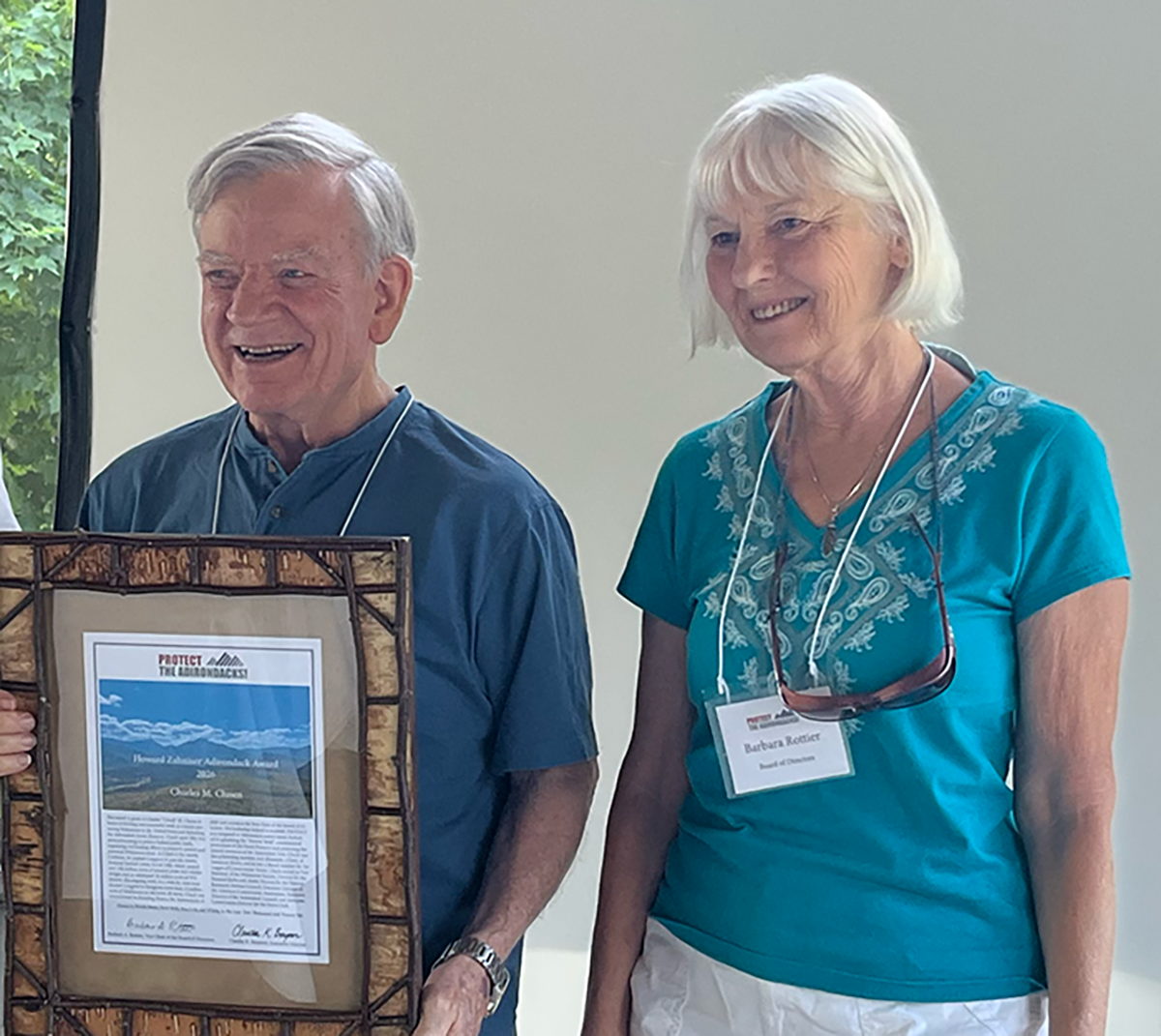
Paul Hai, SUNY ESF discussing the Timbuctoo program
EPF Water and Climate Research
The Adirondack Watershed Institute (AWI) at Paul Smith’s College in the Adirondack Park conducts a long-term (over twenty years) water quality monitoring program and conducts invasive species management throughout the Park. The Institute’s mission is to protect clean water, conserve habitat and support the health and well-being of people in the Adirondacks through scientific inquiry, stewardship and real-world experiences for students.
The Survey of Climate and Adirondack Lakes Ecosystems (SCALE) is a multi-year study of how climate change impacts waterbodies in the Adirondacks. SCALE researchers from Cornell College of Agriculture and Life Sciences, Rensselaer Polytechnic Institute, the Ausable Freshwater Center and other academic partners are examining how climate change impacts baseline conditions of waterbodies, and exploring the relationships between climate change and harmful algae blooms, food webs, and mercury bioaccumulation. This data will inform future climate policymaking and guide strategic investment in greenhouse gas reduction and climate resiliency.
PROTECT is urging the Legislature to restore $200,000 each for research and monitoring at the AWI and the Atmospheric Sciences Research Center Whiteface Mountain Field Station, which both received no funding in the Executive Budget. Funding for SCALE should be increased to $2 million.
EPF Invasive Species
As the effects of climate change become more pronounced, New York State has experienced an unprecedented influx of terrestrial and aquatic invasive species. The amount of State funding for invasive species control and eradication needs to keep up with this continually increasing problem.
PROTECT is urging the Legislature to incluse invasive species funding of at $18,550,000, with $500,000 to Cornell University for the control of hemlock wooly adelgid.
Clean Water Infrastructure Act
Funding provided under the Clean Water Infrastructure Act (CWIA) is essential to protecting Adirondack Park waters and to promoting new business and affordable housing in Adirondack Park communities. There is a great need for funding for clean water infrastructure projects to allow communities in the Adirondack Park to provide clean water to residents and visitors. The current backlog of wastewater treatment plant and sewer system projects in Adirondack communities exceeds $200 million. In addition, failing private septic systems throughout the Park are compromising surface and groundwater quality. The CWIA’s Septic Replacement Fund provides funding to counties for financial assistance to homeowners who need to replace or upgrade failing septic systems.
This fund has historically received $500 million each year. PROTECT is urging the Legislature to provide at least $500 million for the Clean Water Infrastructure Act to assist both State-wide and Adirondack Park communities in addressing urgent and widespread clean water infrastructure needs.
Increase Staff at DEC and the Adirondack Park Agency
PROTECT urges the Legislature to allocate funding to increase staffing for DEC Forest Rangers and the Adirondack Park Agency (APA). The State Budget must increase DEC Forest Ranger staffing because these brave, highly trained professionals are essential to protecting our public lands, responding to emergencies, and keeping millions of Adirondack and Catskill visitors safe. APA needs additional staff to fulfill its statutory mandate to provide for the planning and protection of the 6 million acres of public and private lands within the Adirondack Park. Today, the Adirondack Park faces unprecedented environmental, social, and economic pressures from climate change, overuse of trails and waterways, fragmented forests, an acute shortage of affordable housing, and outdated development standards that threaten the long-term health of both the Park’s natural resources and its communities. APA staff should be increased so the agency can address the increased workload, respond to the surge in development pressures, engage in long-term planning to protect Adirondack Park resources, and respond to the mounting demands on the Adirondack landscape from natural and human-induced changes.
PROTECT is urging the Legislature to ensure that DEC and APA has sufficient staff to effectively carry out their missions to serve and protect the people and natural resources of the Adirondack Park.
Climate Protection-Based Private Land Forest Management Program
PROTECT is urging the Legislature to include in the State Budget an amendment to the Real Property Tax Law that would create a tax incentive for private landowners to keep mature forests intact. Protecting standing forests reduces carbon in the atmosphere and benefits community safety, carbon storage and sequestration, climate resiliency, and New Yorkers’ wallets. A climate protection-based program for private forest lands would be especially beneficial in the Adirondack Park, where millions of acres of privately owned forests are at risk of conversion to non-forestry uses. A straightforward state program, available to willing private landowners across New York, would provide annual property tax benefits in exchange for maintaining intact forests. In addition, localities meeting specified criteria would be eligible to seek state reimbursement of lost property taxes revenues from the real estate transfer tax funds. This approach will help New York achieve the goals of the Climate Leadership and Community Protection Act and the 30 by 30 Act, while also improving habitat connectivity for wildlife and reducing forest fragmentation.
Legislation to establish this program already exists (S5603/A7550), and we urge the Legislature to advance this proposal through the budget process.