
The Department of Environmental Conservation (DEC) has released for public comment a draft Other Power-Driven Mobility Devices (OPDMD) Policy (Policy) that will guide where OPDMDs may be used by individuals with mobility disabilities to access outdoor recreational programs (hiking/walking, bicycling, hunting, fishing, and wildlife viewing) on State lands managed by DEC. This Policy creates a statewide framework to address OPDMD use and demonstrates DEC’s commitment to providing meaningful recreational access for persons with disabilities on State lands. Because they are powered by a motor or engine, all OPDMDs meet the definition of “motor vehicle” in the Adirondack Park State Land Master Plan (Master Plan).
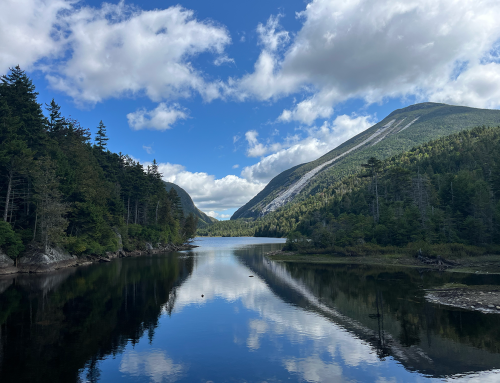
The backdrop to DEC’s new Policy is that in 2024, the Adirondack Park Agency (APA) and DEC initiated a process to propose changes to the Master Plan, which sets overall management policy for the “forever wild” Forest Preserve. One of the changes proposed would have fundamentally changed the character, management, and the essence of areas of the Forest Preserve classified as Wilderness, Primitive, and Canoe, which are the wildest part of the Forest Preserve. The proposal was to change the definition of motor vehicle to exclude OPDMDs, and potentially allow any OPDMDs in Wilderness, Primitive, and Canoe areas where motor vehicles are strictly prohibited.
Click here to read the comment letter on this issue from Protect the Adirondacks.
In December 2024, five Adirondack organizations banded together to urge APA and Governor Kathy Hochul, who would have to approve any changes to the Master Plan, to change its proposal and protect Wilderness Areas. The five groups included Protect the Adirondacks, Adirondack Council, Adirondack Mountain Club, Adirondack Wild, and Adirondack Wilderness Advocates. In a group letter to Governor Hochul, the groups stated:
The undersigned Adirondack Park advocacy groups respectfully urge you to intervene to prevent an unprecedented and significantly damaging change to the Adirondack Park State Land Master Plan (Master Plan) that is being proposed by the Adirondack Park Agency (APA). The proposed change, in the context of updating the Master Plan in terms of accessibility, would erroneously allow public motor vehicle use in Wilderness, Primitive, and Canoe areas. Without exception, the signatory groups strongly support and have been vocal advocates for making the Adirondack Park welcoming and expanding access for persons with disabilities to recreational opportunities in the Adirondack Forest Preserve. As discussed below, such expanded access for people with disabilities has been and can continue to be achieved without taking the drastic step of amending the Master Plan in the way proposed by APA and DEC.
In a joint letter to the APA, the groups stated
We strongly oppose APA’s proposal to exclude Other Power-Driven Mobility Devices (OPDMDs) from the definition of motor vehicles in the Master Plan. OPDMDs are defined in the Americans With Disabilities Act (ADA) as “any mobility device powered by batteries, fuel, or other engines–– whether or not designed primarily for use by individuals with mobility disabilities––that is used by individuals with mobility disabilities for the purpose of locomotion, or any mobility device designed to operate in areas without defined pedestrian routes, but that is not a wheelchair.” This broad definition includes, among other things, cars, trucks, all-terrain vehicles, golf carts, and Segways—devices that are clearly motor vehicles.
Excluding OPDMDs from the definition of motor vehicles renders these devices conforming in all Forest Preserve land management classes. Currently, as APA staff have noted, individuals apply to the DEC for a permit to use OPDMDs on Forest Preserve lands. While we acknowledge that there is currently a system in place to provide access on a case-by-case basis, a statewide policy is needed to provide clear guidance for land managers and people with disabilities. Therefore, there is no need for, nor do ADA rules require, the Agency to so drastically alter the definition of motor vehicle in the Master Plan—a change that will threaten the very nature of the lands the Master Plan was created to protect.
Eventually, APA withdrew the objectionable proposed changes to the Master Plan, and DEC began the process of crafting the new draft Policy that is now available for public comment.
The ADA Does Not Require Fundamental Alteration of Existing Programs
Title II of the ADA prohibits State and local government entities from discriminating against persons with disabilities in the services, programs, and activities they provide and requires that “reasonable modifications” be made to such services, programs and activities to make them accessible to persons with disabilities. 42 USC § 12132. The ADA directs the Department of Justice (DOJ) to promulgate implementing regulations for Title II. DOJ promulgated those regulations in 1991 and updated and revised the regulations in 2010. 28 Code of Federal Regulations (CFR) Part 35.
Significantly, both the ADA and the DOJ implementing regulations specify that a public entity is not required to modify its programs or facilities for use by persons with disabilities if doing so would “fundamentally alter” the program or facility. The ADA provides: Nothing in this chapter alters the provision . . . specifying that reasonable modifications in policies, practices, or procedures shall be required, unless an entity can demonstrate that making such modifications in policies, practices, or procedures . . . would fundamentally alter the nature of the goods, services, facilities, privileges, advantages, or accommodations involved. 42 USC § 12201(f); (emphasis added).
The DOJ regulations echo this crucial statutory provision: A public entity shall make reasonable modifications in policies, practices, or procedures when the modifications are necessary to avoid discrimination on the basis of disability, unless the public entity can demonstrate that making the modifications would fundamentally alter the nature of the service, program, or activity. 28 CFR § 35.130(b)(7)(i); (emphasis added).
No OPDMDs Should be Allowed in Wilderness, Primitive and Canoe Areas Where Motor Vehicles Are Prohibited
PROTECT strongly supports improving accessibility to the Forest Preserve and we recognize and applaud DEC’s ongoing efforts to expand access through accessible trails, campsites, fishing and boating facilities, and programs such as Commissioner Policy 3, Motorized Access Program for People with Disabilities. These initiatives demonstrate that accessibility and responsible Forest Preserve stewardship can be successfully balanced.
However, we are opposed to the draft Policy’s proposal to potentially allow one category of OPDMDs to be operated in Wilderness, Primitive and Canoe areas. We believe that, because OPDMDs are “motor vehicles” within the meaning of the Master Plan, this proposal is inconsistent with Article 14 of the New York State Constitution, the Master Plan, existing Unit Management Plans, and DEC’s regulations for motor vehicle use on Forest Preserve lands.
DEC-managed lands provide outdoor recreation, including hiking, camping, boating, hunting, fishing, trapping, birdwatching, and wildlife viewing. However, the recreational program offered in Wilderness, Primitive, and Canoe areas is not simply “outdoor recreation” in general. Rather, under the Master Plan, it is the provision for people of all abilities of a wilderness experience in a protected area that is “untrammeled by man.” Master Plan at 24.
The Master Plan defines Wilderness as an area with a primeval character, without significant human improvement, protected and managed to preserve natural conditions, and offering outstanding opportunities for solitude and primitive, unconfined recreation. Master Plan at 24. The central management guideline is to “achieve and perpetuate a natural plant and animal community where man’s influence is not apparent.” Id. Consistent with that mandate, the Master Plan prohibits public use of motor vehicles and bicycles in Wilderness, Primitive, and Canoe areas. Id. at 27, 33, 36. Accordingly, Policy should be revised to list all OPDMDs as incompatible in Wilderness, Primitive, and Canoe areas beyond 500 feet of a public highway. Such a revision would properly reflect the threshold “fundamental alteration” analysis required by the ADA and ensure consistency with governing state and federal law.
Submit a Public Comment to DEC
The public comment period closed on March 9, 2026.
We are urging DEC to revise the draft policy to classify all OPDMDs as incompatible in Wilderness, Primitive and Canoe areas beyond 500 feet of a public highway.
Comments to DEC must be submitted in writing and can be emailed to landsforests@dec.ny.gov with the subject line “Comments on Draft OPDMD Policy” or mailed to the following address:
Josh Clague
NYSDEC
625 Broadway
Albany, NY 12233-4754