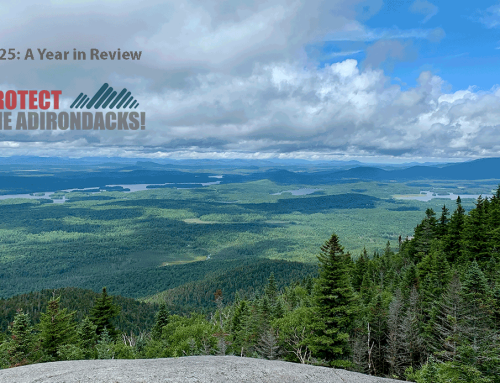
In 2026, Protect the Adirondacks will carry on its role as the watchdog for the Adirondack Park, pursuing action through advocacy, public education and outreach, organizing and legal proceedings to protect the natural and human communities of the Adirondack Park for current and future generations.
We start the year off with three new Directors who joined us in 2025 and brought with them broad backgrounds in conservation advocacy, public land use planning and policy, visitor use management, and real estate law: Michala Hendrick, Charlie Olsen, and Juliet Cook.

New PROTECT Board of Directors: Michala Hendrick, Charlie Olsen, and Juliet Cook.
Advocacy
PROTECT will keep up its efforts to have Whitney Park added to the Adirondack Forest Preserve. This 36,000-acre expanse of largely undeveloped wilderness in the heart of the Adirondack Park is a keystone piece of privately-held land in the Hamilton County that borders the William C. Whitney Wilderness Area, and contains 22 lakes and ponds, over 100 miles of undeveloped shoreline, and is lightly developed with thousands of acres of continuous high forest canopy. Our Paddle for Wilderness in September 2025 showcased to Governor Kathy Hochul the incredible opportunity the State has to protect this vital missing piece for the Forest Preserve, and a missing link for historic public canoe routes through the Park. In October 2025, Governor Hochul expressed an interest in the State purchasing around 32,000 acres for the public Forest Preserve. The property was under contract to be sold to a private developer, but the developer has reportedly cancelled its contract to buy the property. PROTECT supports the State purchasing the property to add it to the Forest Preserve; the funds from the purchase reportedly will go to the Town of Long Lake as the beneficiary of John Hendrickson’s estate (the current landowner) according to the Trust document, which has not been made public. Our desktop analysis of the property shows that much of Whitney Park is unsuitable for developmen; we will scrutinize all proposed development plans carefully.
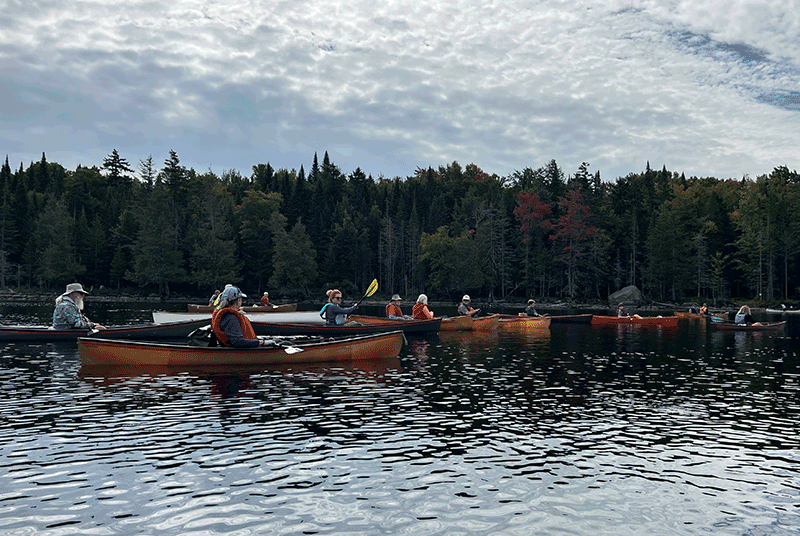
Leigh Hornbeck with the yellow paddle at the Paddle for Wilderness on Forked Lake where we honored Pete and Ann Hornbeck and called on Governor Hochul to protect Whitney Park.
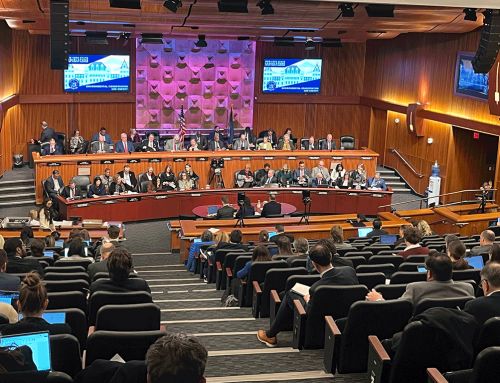
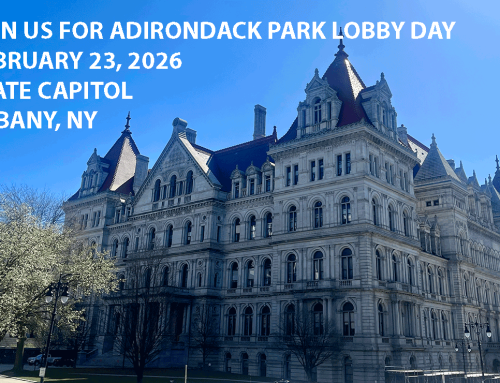
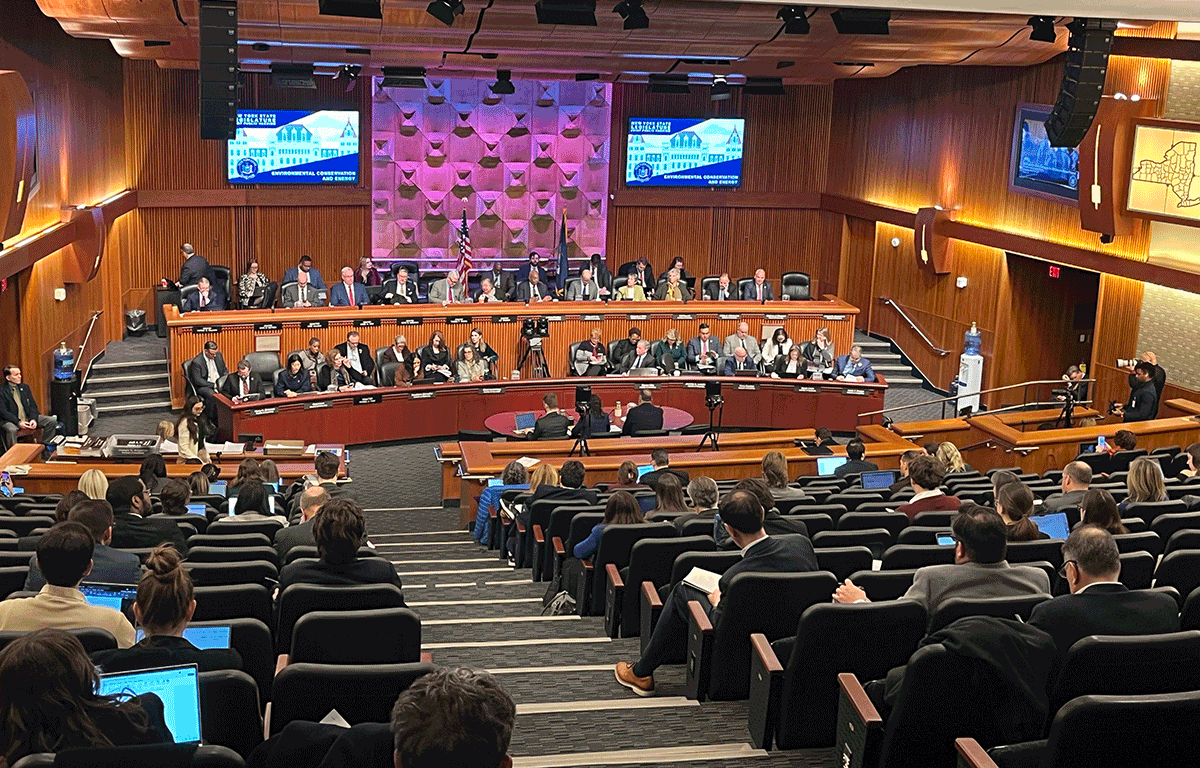
During the New York State Budget process, PROTECT is advocating for State land stewardship funds for the Adirondack Forest Preserve and for various Adirondack Park initiatives. We are working with other Adirondack organizations to host the Adirondack Park Environmental Lobby Day on Monday February 23, 2026 for volunteers and activists to speak with Legislators and staff about needed funding for vital programs including land protection, invasives species control, Forest Preserve Stewardship and visitor centers, the Survey of Climate Change and Adirondack Lake Ecosystems, and support for important Adirondack institutions, such as the Adirondack North Country Association’s Adirondack Diversity Initiative, Paul Smith’s College Adirondack Watershed Institute, Adirondack Experience, SUNY ESF Newcomb Visitors Interpretive Center, SUNY’s Environmental Science and Forestry’s Timbuctoo Institute, and Cornell’s New York State Hemlock Initiative.
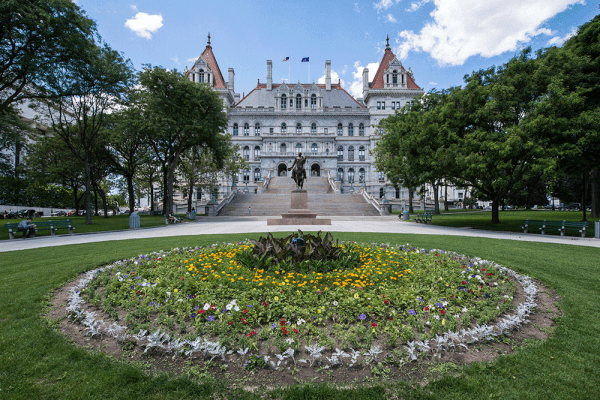
Overall, PROTECT is advocating for $425 million in funding for the Environmental Protection Fund (EPF). Funding in the EPF is the main source of funding for stewardship of public lands within the Adirondack Park and for the environmentally sound economic development of communities in the Park. The EPF was funded at a new historic high of $425 million in 2025. This year, we are asking for that funding to be maintained and for the EPF to include: $50 million for state land stewardship, $10 million for Adirondack and Catskill Park visitor safety and wilderness protection projects, and many other programs. In 2025, $1 million was included for conducting a carrying capacity study of the Saranac Chain of Lakes. DEC has yet to use the funding to undertake a carrying capacity study. PROTECT has asked for court relief to require DEC to complete the mandatory study and we are asking for the $1 million to be reappropriated in this year’s budget.
PROTECT is working with other wildlife organizations to advocate for the wolf protection bill in the State Legislature. The bill, sponsored by former Senator Brad Hoylman-Sigal and Assemblymember Robert Carroll, requires all canids (coyotes and wolves) taken by hunters or trappers to be tagged (as is currently done with other fur/game species) and directs DEC to collect DNA samples of any coyote weighing more than 50 pounds (an indicator that the animal may actually be a wolf). The bill would also require DEC to report to the Governor and Legislature on the status of wolves in the State; require DEC to establish a website portal for the public to report suspected wolf sightings; and modify its hunting and trapping training curriculum to include educational information concerning the presence of wolves and legal protections in New York (wolves are protected endangered species). We worked with other advocates and the bill’s sponsors to make some changes to the language and in 2025 the bill passed the Assembly Environmental Conservation Committee but unfortunately stalled in the Senate. In 2026 we hope to make more progress on this bill in the NY Legislature as the federal administration cuts protections for wolves.
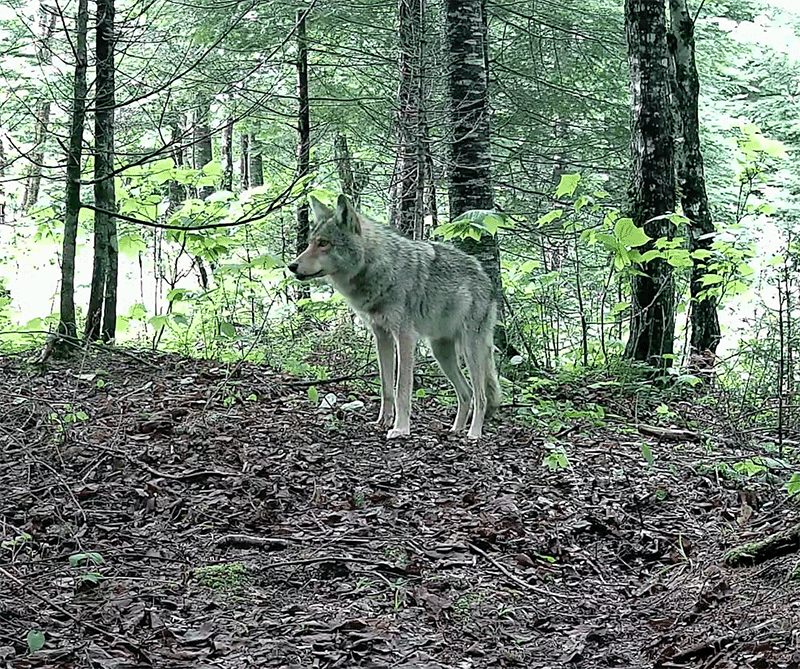
Candids over 50 pounds would be subject to DNA testing to determine if they are a coyote or a wolf
PROTECT strongly supports a new bill providing a financial incentive for private landowners to maintain wild forest lands, which are critical for reducing the impacts of climate change. State law currently provides real property tax reductions for landowners who manage fifty or more acres of their land for timber production pursuant to a timber management plan approved by DEC. Landowners who meet these criteria are eligible for a real property tax exemption of up to 80 percent of the assessed valuation of the lands. The new bill, supported by several organizations and sponsored by Senator Rachel May and Assemblymember Dr. Anna Kelles, expands the existing real property tax incentive to landowners who place at least ten acres of forested property under a conservation easement that ensures that the land will be permanently conserved as wild forest and prohibits the cutting, removal or destruction of trees on the tract (with certain exemptions such as DEC-approved actions to address invasive species). The bill also authorizes State assistance to municipalities that lose real property tax revenues as a result of landowners enrolling in the program by tapping into State revenues generated by the real property transfer tax to offset lost real property tax revenues.
We will be on the lookout for the State to release the updated Open Space Conservation Plan in 2026. After the State passed the 30 by 30 law in 2022, setting a goal of conserving 30% of the State’s lands and waters by 2030, PROTECT produced a report 20% in 2023: An Assessment of the New York State 30 by 30 Act demonstrating that the State needs to protect approximately 3 million acres of land to reach its goal. This report set the stage for the Department of Environmental Conservation’s (DEC) report released July 1, 2024 that calculated that 2.83 million acres of land need to be protected to meet the 30 by 30 goal. The new Open Space Conservation Plan should provide the framework for how the State will reach the 30 by 30 goal and for how the State can use open space protection as a way to achieve New York’s Climate Action Plan to reduce greenhouse gas emissions. In 2025, we pushed back on DEC’s plan to evaluate potentially significant adverse impacts from open space protection in its update to the Open Space Conservation Plan.
PROTECT will support a Constitutionally-permissible way to repurpose the six closed correctional facilities on State lands in the Adirondack Park. Under state law, a Constitutional amendment is needed to allow these facilities to be reused and repurposed. In 2024, PROTECT supported a “Three Prisons” constitutional amendment for Article 14 that would authorize the State to remove from the Forest Preserve three closed state prisons that were built on Forest Preserve lands. This amendment focused on Camp Gabriels in Franklin County, Mount McGregor Correctional Facility in Saratoga County, and the Moriah Shock Correctional Facility in Essex County. Since then three other facilities in Forest Preserve counties closed: Great Meadow facility in Washington County, Sullivan facility in Sullivan County and Bare Hill facility in Franklin County (closing in March 2026). These facilities include hundreds of buildings and are highly developed.
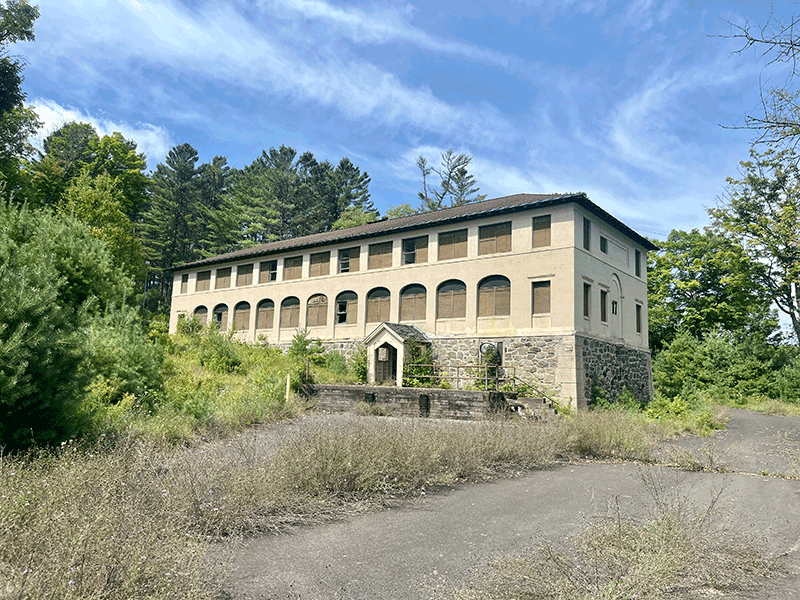
Camp Gabriels is a closed correctional facility located on State lands in Franklin County. A Constitutional Amendment is needed to rehabilitate the facility’s buildings and grounds.
PROTECT will work to advance road salt reduction efforts in 2026. The Adirondack Road Salt Reduction Task Force final report, released in September 2023, contained strong docuentation of the pollution of lakes and residential wells along heavily salted road corridors. The report identified options for experimental road salt applications and pilot-studies to use less salt, employ substitutes, and to use new types of equipment or techniques for winter road management and de-icing. The State Department of Transportation (DOT) undertook a few pilot studies in the winters of 2023 and 2024, but the State did not make meaningful progress in 2024 on reducing road salt usage in the Adirondacks. In 2025, DOT said it is committing to expanding the road salt reduction techniques across the State. We will be supporting the Road Salt Reduction Council legislation, a bill sponsored by Senator Pete Harckham.
PROTECT is in the midst of a multi-year, nonpartisan effort to re-imagine and strengthen the Adirondack Park Agency Act. We have collected information from stakeholders and engaged with members of the New York State Legislature and their staff to discuss pathways for reform. These efforts aim to align ecological protection with economic opportunity—ensuring that the Adirondack Park thrives for generations to come.
PROTECT also supports a bill requiring electrification of planes, trains and boats, the packaging reduction and recycling infrastructure act, and the modernization of the Bottle Bill. In addition, PROTECT supports the proposed ban on land application of sewage sludge (S5759C, Harckham), which establishes a five year moratorium on land spreading of biosolids and requires testing for PFAS in biosolids, harmful algal blooms monitoring (S1833, May), which establishes the harmful algal bloom monitoring and prevention fund, and NY HEAT (S4158, Krueger), which aligns utility regulation with state climate justice and emissions reductions targets (a related bill S8417 passed in 2025).
DEC should soon be releasing the latest State Wildlife Action Plan (SWAP), which must be updated and submitted to the U.S. Fish and Wildlife Service to secure continued federal funding for wildlife conservation. PROTECT submitted comments on the draft species status assessment prepared by DEC and we submitted additional comments focused on four mammal species (Canada lynx, cougar, moose and wolf) and four bird species (American three-toed woodpecker, bay-breasted warbler, Bicknell’s thrush, and red-headed woodpecker) that are either present in low or declining numbers in the Adirondack Park or that formerly had breeding populations in the Adirondacks but are now rare. PROTECT urged DEC to provide increased protections for these at-risk species. In our most recent comments, we urged DEC to reinstate the common loon to the SWAP. Downward trends in reproductive success and continued threats to this species and its habitat warrant inclusion.
PROTECT will continue urging the Adirondack Park Agency (APA) to update its wetland regulations to implement the Freshwater Wetlands Act (FWA) provisions that went into effect in January 2025. APA administers and enforces the FWA in the Adirondack Park. To date, APA has not updated its wetlands regulations, leaving the wetlands in the Park potentially less protected than wetlands anywhere else in the State.
Independent Public Oversight
PROTECT manages the best Independent Public Oversight Program in the Adirondacks. In 2026, PROTECT will review matters involving DEC, APA, the Olympic Regional Development Authority (ORDA), the Department of Transportation (DOT), and the dozens of local town, village, and county governments that review and approve private land development projects. Our comment letters are all posted under Public Comments on our website.
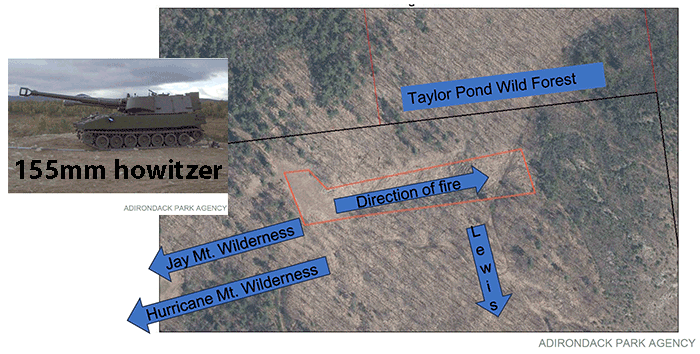
We will continue to encourage APA to enforce its own statutes, integrate current ecological science into project review, and adopt a more precautionary and conservation-minded approach to land use planning. We plan to participate in APA’s adjudicatory hearing for the controversial proposal to site a howitzer firing range in the Town of Lewis in the Adirondack Park. Ultimately we hope that this adjudicatory hearing, the first held by APA in 14 years, will lead to the APA Board denying the proposed project.
DEC is moving forward with plans to remove Debar Lodge and its associated complex of structures from the shore of Debar Pond in the northern Adirondacks. As part of this process, DEC indicated that intends to develop a new Unit Management Plan (UMP) for the Debar Mountain Complex. DEC has determined that it has neither an operational need for the existing buildings nor the resources to properly manage them. As such, the agency proposes to clear the site of all structures and restore the area to a wild forest condition. We will urge DEC to follow through on its stated commitment to remove these unconstitutional structures and restore the Forest Preserve at Debar Pond to its rightful wild state.
It has been four year since New York’s highest court struck down DEC’s plans to build a network of hundreds of miles of “Class II Community Connector Snowmobile Trails” in the Forest Preserve that violated Article 14 of the New York Constitution, the famed “Forever Wild” clause. PROTECT’s win catalyzed reform efforts in DEC’s management of the Forest Preserve. DEC formed the Forest Preserve Trails Stewardship Working Group, which is comprised of stakeholders in the Adirondack and Catskill Parks from local government, trail building groups, and conservation organizations including PROTECT. DEC with input from the Working Group drafted design standards for all trails — hiking, biking, cross-country skiing, horseback riding or snowmobiling. These standards create a series of trail classes with varying limits on trail tread widths, trail corridor widths, heights of cleared area, and the types of bridges and drainage technologies to be used, among other things. We continue to look for DEC to release the standards for official public comment.
In 2023, the Working Group deeveloped a new Commissioner’s Policy on “Forest Preserve Work Plans,” which governs the planning and implementation of management activities such as trail work, bridge construction, campsite and parking lot construction, among other things. Significantly, the new Work Plans are supposed to focus on ensuring compliance with the Forever Wild clause. We will continue to monitor the Work Plans prepared by DEC staff and comment on them to DEC when we see problems. Some of the Work Plans still have little to no discussion explaining how certain proposals, such as for tree cutting, comply with the Forever Wild clause. In 2025, we commented on a draft Work Plan for a downhill mountain bike race course at Whiteface Mountain that was constructed without DEC approval. DEC issued a Notice of Violation to ORDA and required a corrective action plan. We will continue to monitor the plans for construction activities at Whiteface Mountain in 2026.
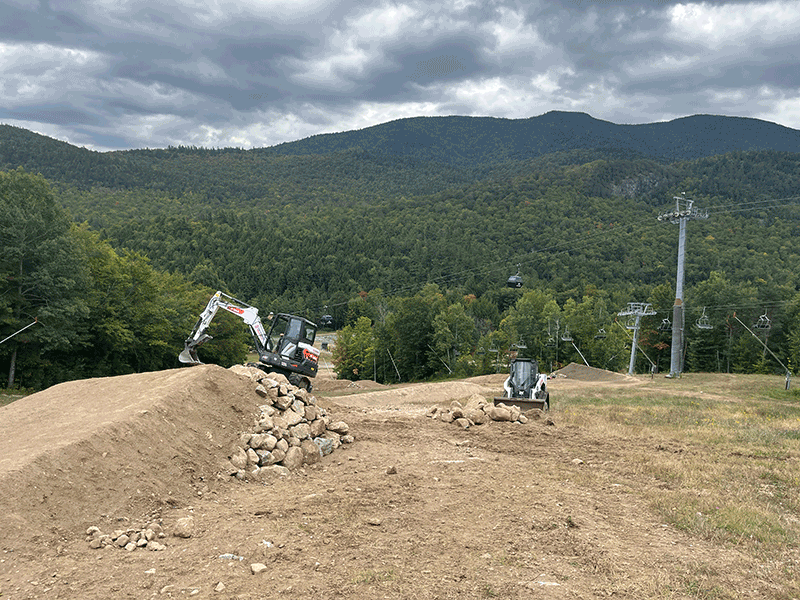
Construction of mountain biking race course on Whiteface Mountain
We will watch for DEC’s draft Visitor Use Management (VUM) plan for the central High Peaks Wilderness Area to be released to the public in 2026.
The entire 34-mile Adirondack Rail Trail is now complete and open for recreational use. It has been wildly popular and we will continue to monitor how the trail and the Forest Preserve are sustaining the new level of use. We continue to believe that the success of the Adirondack Rail Trail makes a real case for the creation of the Hudson River Rail Trail in Saratoga, Warren and Essex Counties and we will encourage Warren County and other partners to create such a rail trail.
In the Town of Moriah, PROTECT has been urging DEC and APA to take action to compel a whiskey maker to control emissions from its storage facilities that are coating nearby homes, cars, signs, and fencing with a black mold known as “whiskey fungus.” The company, WhistlePig Whiskey, owns and operates 13 warehouses in the small community of Mineville. PROTECT has asked the APA and DEC to enforce their permits to stop WhiskeyPig from contaminating nearby properties. In 2025, DEC requested that the U.S. Environmental Protection Agency review the situation and make a determination as to whether the facility should be subject to federal air permitting requirements. Apparently EPA is considering issuing a Notice of Violation to the facility and requiring the installation of emissions control technologies that will reduce the emissions that cause the whiskey fungus. We will continue encouraging more mitigation for the emissions from this facility.
PROTECT will continue monitoring other proposed development projects, including the major “Stackman” subdivision proposal in the Town of Jay, a new subdivision in the Town of Bolton and a new subdivision in the area of Loon Lake in Franklin County.
Lakes throughout the Adirondack Park have now used the aquatic herbicide ProcellaCOR EC to control invasive Eurasian watermilfoil (EWM). PROTECT continues to be concerned about the use of ProcellaCOR and its potential for long-term impacts on the ecosystem, especially where it is applied in the same waterbody year after year. EWM must be controlled with sustained, active management and we do not believe that ongoing chemical herbicide treatments is the answer. The scientific follow-up studies by the Lake George Association after chemical treatment in Lake George are yielding important information about the persistence of this chemical. PROTECT continues to urge lake associations and managers to develop robust lake management plans that include a variety of non-chemical tools to address the multitude of threats facing Adirondack lakes.
PROTECT continues to monitor actions by the APA and DEC to incorporate an assessment of GHG emissions for major projects as required by the Climate Leadership and Community Protection Act (CLCPA). PROTECT urged both agencies to start assessing upstream and downstream GHG emissions associated with the major projects, such as the Barton Mines project.
Legal Action
Protect the Adirondacks takes legal action when necessary, when we believe the law has been broken and all other advocacy efforts and remedies have been exhausted. Going to court is always the last move on the board. In 2026, we will advance two cases involving public and private lands in the Adirondack Park.
With other petitioners, PROTECT is challenging the approval of a major marina expansion on Lower Saranac Lake, specifically over APA’s decision that installation of a series of new docks in regulated wetlands did not require a wetlands permit. APA had required a wetlands permit for years and then reversed course. The trial court dismissed the case and we are now appealing to the Appellate Division in Albany. We expect the appellate court will hear oral arguments and render a decision in 2026.
Under the Adirondack Park State Land Master Plan and the Saranac Lakes Wild Forest Unit Management Plan a carrying capacity study has been long required on the Saranac Chain of Lakes. In 2024, PROTECT filed a lawsuit against DEC asking the Court to require DEC to conduct the mandated carrying capacity study for the waterbodies in the Saranac Chain of Lakes. The study is necessary to evaluate the environmental and social impacts of visitor overuse of these water bodies, which is all the more important as APA has approved major expansions of a commercial marinas on Lower Saranac Lake and Lower Fish Creek Ponds. The trail court dismissed the case and we appealed to the Appellate Division in Albany. We expect the appellate court will hear oral arguments and render a decision in 2026.
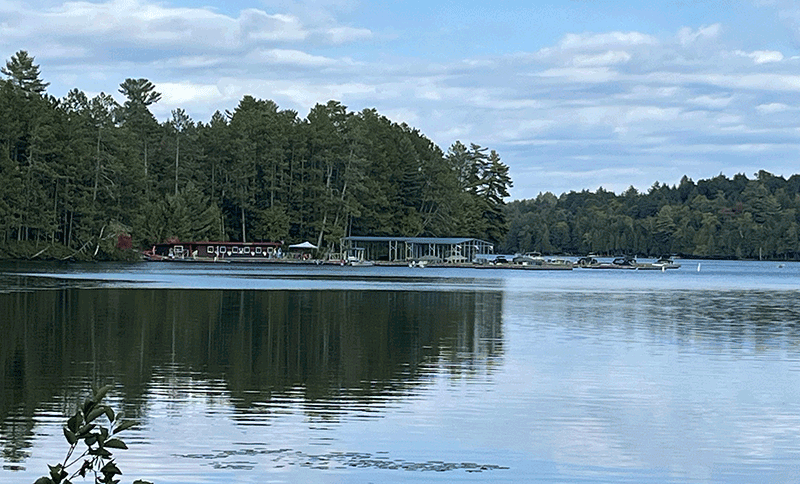
New marina approved by APA and constructed on Fish Creek Ponds.
Research
Sound information is critical to the debate over the future of the Adirondacks. Objective research leads to good public policy. PROTECT is dedicated to bringing sound, reliable information that is scientifically verified to the ongoing public debate over the future of the Adirondack Park and the many challenges facing the region.
2026 will be the 29th year of the Adirondack Lake Assessment Program (ALAP), which is a partnership between Protect the Adirondacks and the Adirondack Watershed Institute (AWI) at Paul Smith’s College. ALAP has three primary objectives to: 1) collect long-term water quality data on individual lakes and ponds in the Adirondack Park; 2) provide long-term trend data on individual lakes and ponds for local residents, lake associations, property owners and local governments to help organize water quality protection efforts; and 3) assemble a profile of water quality conditions across the Adirondacks. ALAP has relied upon trained volunteers who collect water samples and information that is analyzed by the scientists at AWI.
In 2026, PROTECT will remain engaged as a community member of a research team studying the impacts of septic systems on water quality in the Adirondacks.
Public Education and Grassroots Organizing
Protect the Adirondacks regularly publishs opinions and educational articles on topical issues on our website and at the Adirondack Almanack and New York Almanack/New York History websites. We also publish op-eds, letters to the editor, guest commentaries, and post to various social media platforms like Facebook and Threads regularly.
Our online hiking trail guides is a popular feature of our website. This guide lists 100 terrific hikes from across the Adirondack Park, and outside of the busy High Peaks Wilderness, that offer hikers great rewards that showcase the vastness and diversity of the Adirondack landscape. These hikes lead through great forests to mountains, waterfalls, bogs, and remote lakes. The online trail guides include descriptions, trail directions, pictures, and maps that detail the hike and provide information about protecting the natural resources and wild areas of the public Forest Preserve and Adirondack Park and how to be prepared for a good hike by practicing “Leave No Trace” hiking etiquette.
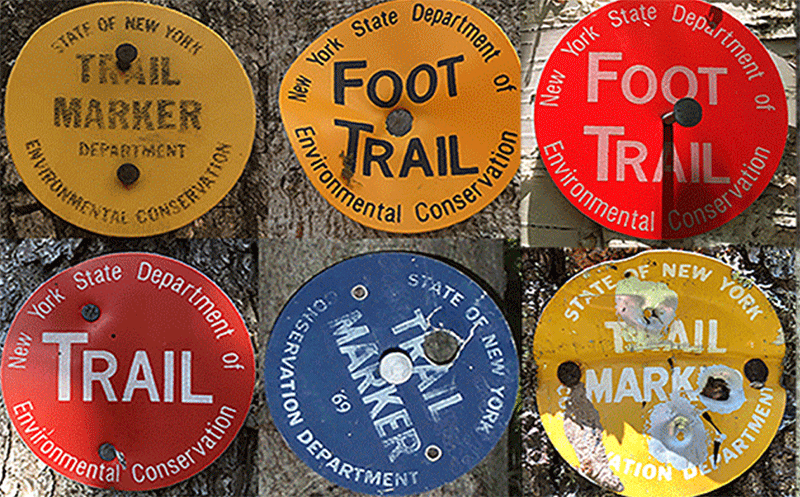
PROTECT regularly contacts its members to urge them attend public hearings or submit public comments or help advocate for passage of legislation.
PROTECT has been encouraging our members and the public to contact Governor Hochul to protect the 36,000-acre Whitney Park.
We are working with several other organizations to deepen our understanding of the negative impacts of wake boat sports on waters of the Adirondacks and to share this information with the public. We are co-hosting a public education webinar on this topic in January 2026. We also prepared draft local legislation for local municipalities to use to regulate the operation of wake boats within Town boundaries.
We will keep updating our publication about accessible paddling opportunities in the Adirondacks.
Thank you to our members!
We are thankful for the financial support, membership, letter and email writing, public comments at hearings, and volunteerism from the members of Protect the Adirondacks. Your grassroots efforts, energy and interests fuel our work and contributes to a record of success each year that helps to keep the Adirondack Park a vital, wild, and vibrant place. If you are not a current member, please sign up now to become a member of Protect the Adirondacks! Click here to join up as a member of Protect the Adirondacks.