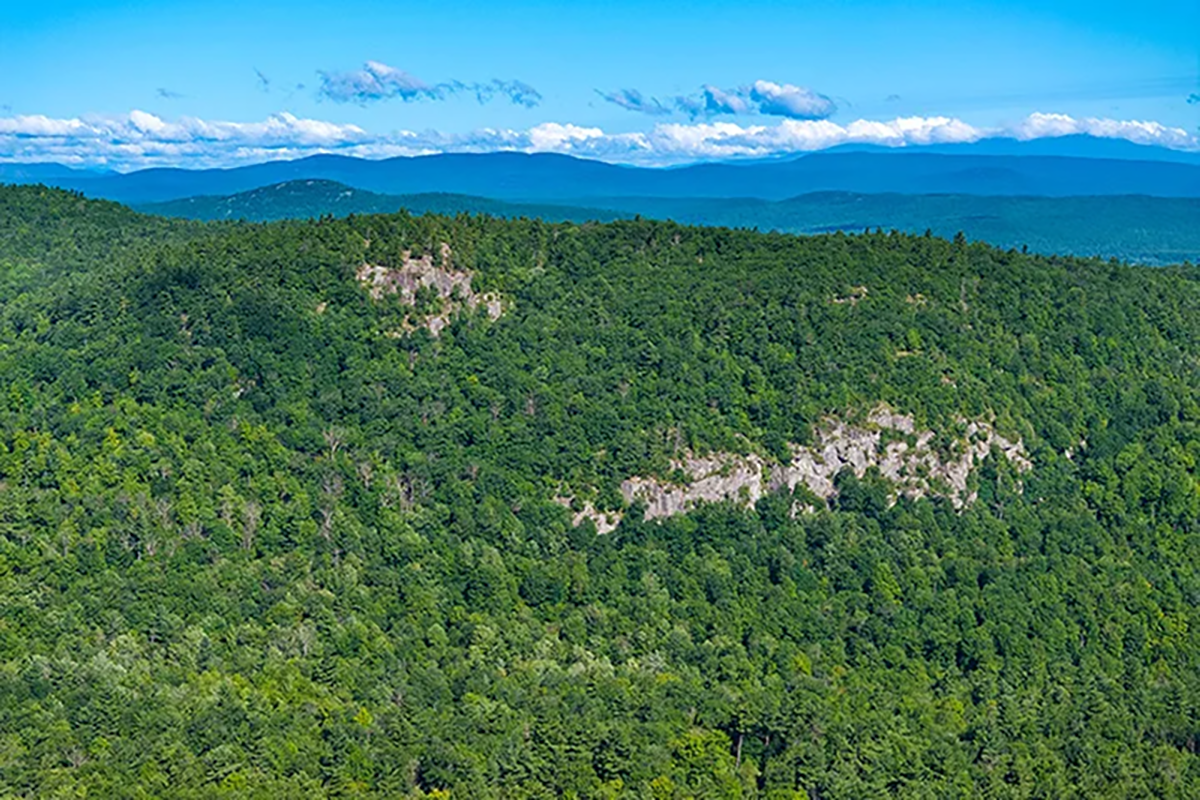
The Adirondack Land Trust purchased 2,390 acres around Drake Mountain in Essex County and the Open Space Institute bought the 1,525-acre former Sabattis Boy Scout Reservation on Low’s Lake in St. Lawrence County
Two important land deals were just announced that will consolidate important open space and protect shoreline habitat on Low’s Lake and in the Champlain Valley. Protect the Adirondacks congratulates the Open Space Institute for its work to protect Low’s Lake, which should expand the Five Ponds Wilderness Area when the lands are transferred to the State, and the Adirondack Land Trust for its purchase of Drake Mountain. PROTECT applauds Amanda Lefton, Commissioner of the Department of Environmental Conservation (DEC), for her public statements affirming that these lands will be transferred to the public Adirondack Forest Preserve.
Adirondack Land Trust protects Drake Mountain in the Champlain Valley
In the Town of Chesterfield, Essex County, the Adirondack Land Trust purchased 2,390 acres around Drake Mountain. These are primarily forestlands that will ultimately be transferred to the State of New York for addition to the Adirondack Forest Preserve. The tract includes 12 ponds, 6.5 miles of streams, including Little Trout Brook, and 126 acres of wetlands. The largest pond on the parcel hosts an active great blue heron nesting area, known as a rookery. The parcel rises from an elevation from 580 to 1,615 feet above sea level and harbors rare and uncommon plant species unique to the Champlain Valley. Wildlife on the site includes beaver, bobcat, white-tailed deer, black bear, among others.
Drake Mountain also provides stunning views across the Champlain Valley and will provide outstanding outdoor recreational opportunities and experiences for the public for decades to come.
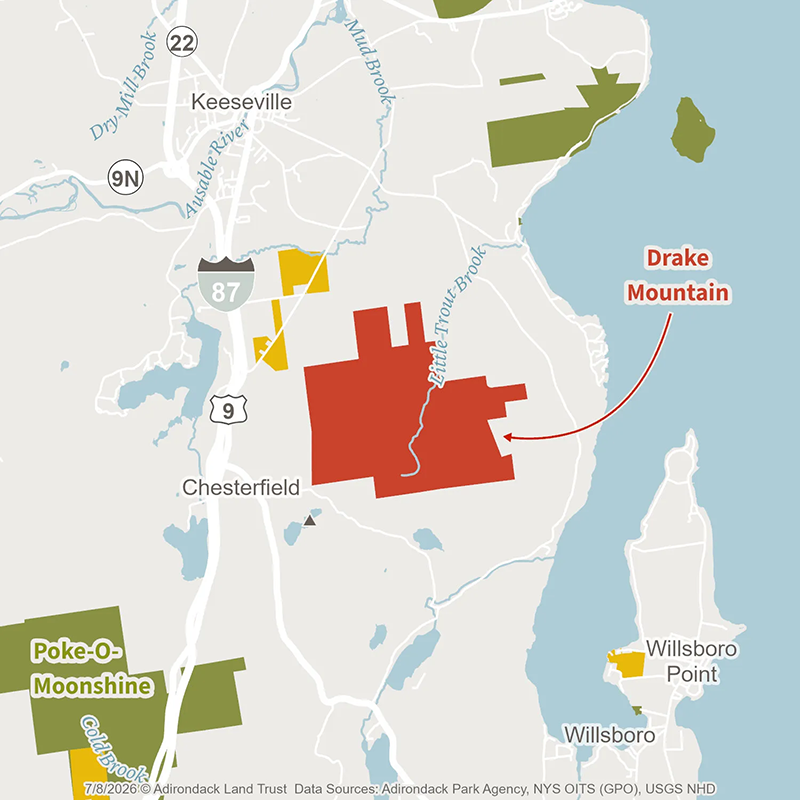
Map shows newly purchased tract around Drake Mountain in red. Map courtesy of Adirondack Land Trust.
In a press release from the Adirondack Land Trust its Executive Director Mike Carr said “Drake Mountain, with its prominent profile and rocky outcrops, is a well-known feature of the town of Chesterfield’s landscape. Visible from the waters of Lake Champlain, and across scenic farmlands, it stands like a vibrant island of forest.”
New York State Department of Environmental Conservation Commissioner Amanda Lefton said, “New York land trusts are critical partners in procuring and conserving land in New York State. The Adirondack Land Trust’s investment safeguards this land’s vital natural resources and ensures that future generations can enjoy the benefits of open space. Conserving this area will protect natural landscapes, wildlife habitat, enhance outdoor recreation, build environmental resiliency, and preserve the natural heritage that defines the Adirondacks and New York State.”
“Our town values its natural, scenic and recreational resources. Keeping Drake Mountain as a forest makes good sense. I look forward to the day when the public can access the land for outdoor activities like hiking and hunting,” said Chesterfield Town Supervisor Clayton Barber.
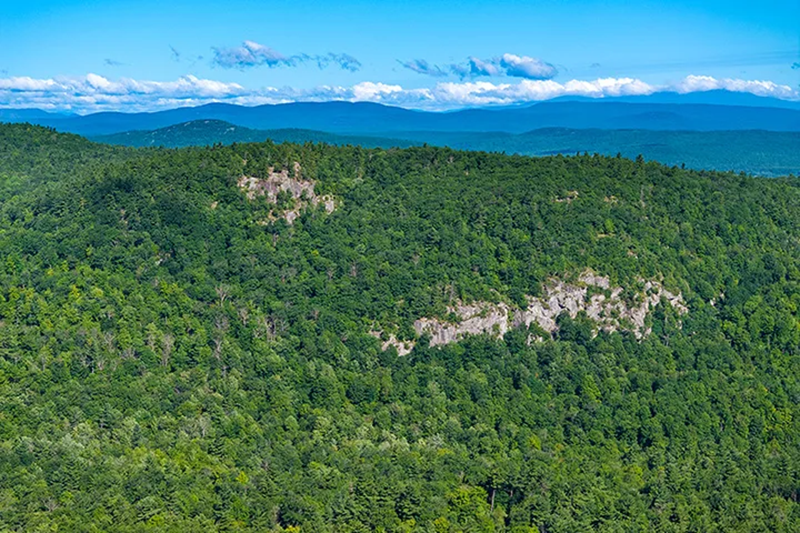
Drake Mountain. Picture courtesy of Adirondack Land Trust.
Open Space Institute protects extraordinary shoreline on Low’s Lake surrounded by Five Ponds Wilderness Area
The Open Space Institute (OSI) has purchased the 1,525-acre former Sabattis Boy Scout Reservation on the North shore of Low’s Lake in the Town of Colton in St. Lawrence County. This property has long been high on the State of New York’s priority list of iconic Adirondack landscapes and advance long-term efforts to maintain forest connectivity and conserve wildlife habitat.
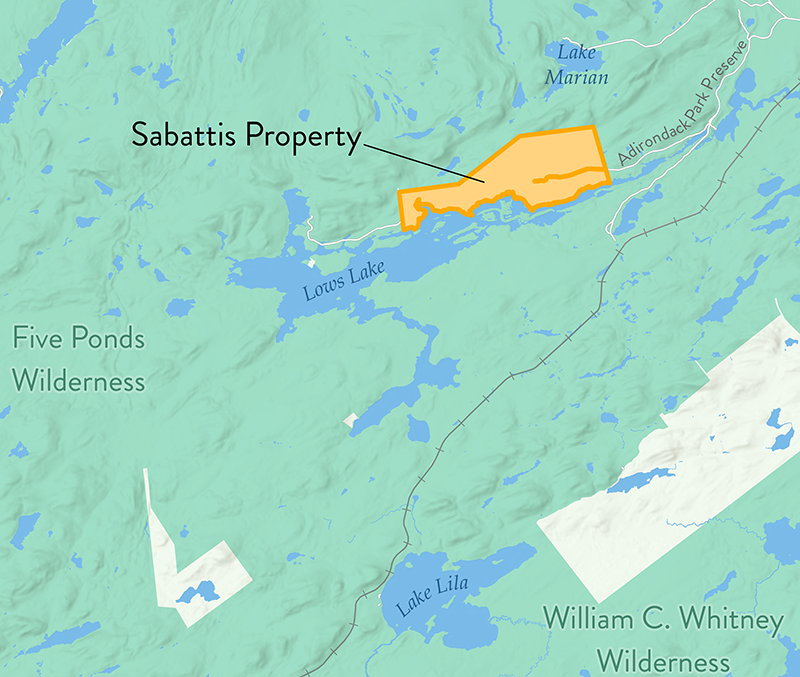
This map shows the Scout Camp holdings purchased by OSI, which will protect vast stretches of Low’s Lake shoreline in perpetuity. Map courtesy of OSI.
In a press release, Erik Kulleseid, OSI’s president and CEO, said: “Properties of this size, ecological value, and strategic importance are increasingly rare. By saving the Sabattis Scout Reservation, OSI is safeguarding one of the Adirondacks’ most significant natural areas and helping ensure that people will continue to enjoy this remarkable place.”
New York State Department of Environmental Conservation (DEC) Commissioner Amanda Lefton said, “Protecting the Sabattis Scout Reservation is an important first step to expanding recreational access to people of all ages and abilities to take advantage of the outdoors of the Adirondacks. We’re proud to partner with the Open Space Institute and look forward to providing future opportunities for New Yorkers and visitors to paddle Lows Lake, hike historic trails, and enjoy nature in this environmentally significant natural area.”
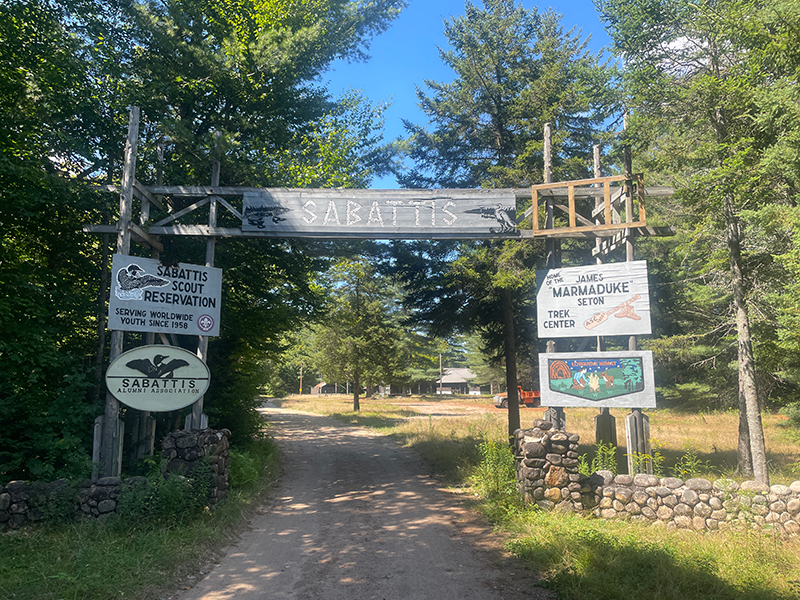
The entrance to the former Scout Camp.
“Sabattis has long been a place where generations of Scouts learned environmental stewardship and to appreciate, respect, and enjoy the outdoors. While this transition is emotional for the Scouting community, we are grateful that New York State and the DEC recognize the environmental significance of this property and are committed to protecting it for the future. We are also encouraged that both Scouts and the broader public will still be able to use the property for generations to come, and that the DEC and the state will preserve it for the enjoyment of future generations,” said Edwin Theetge, Scout Executive and CEO of Scouting America – Longhouse Council.
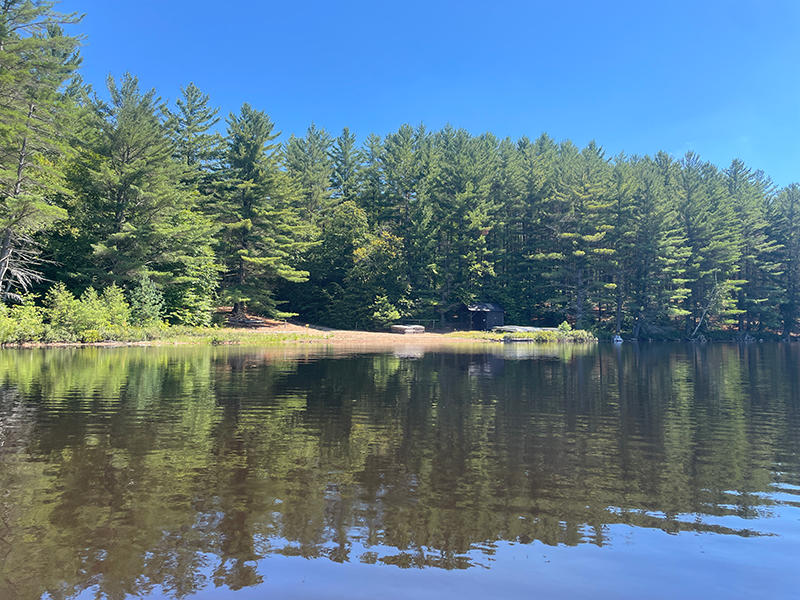
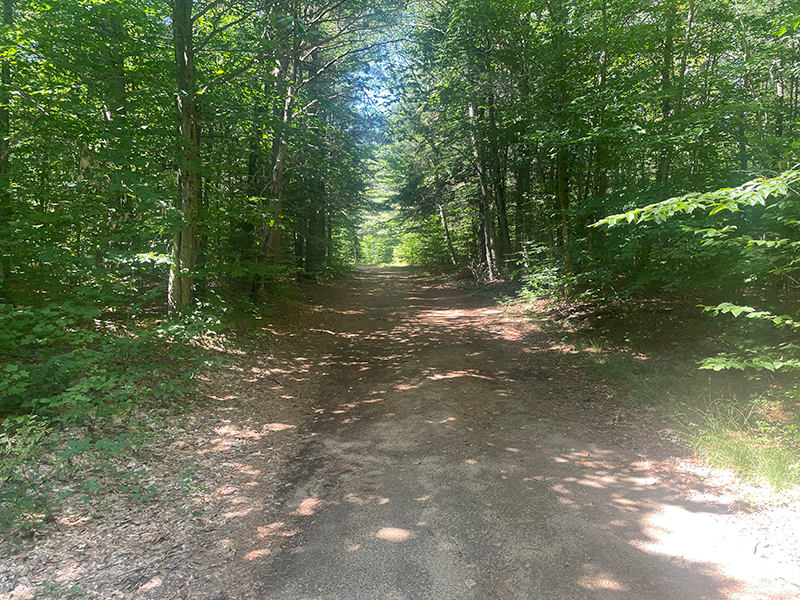
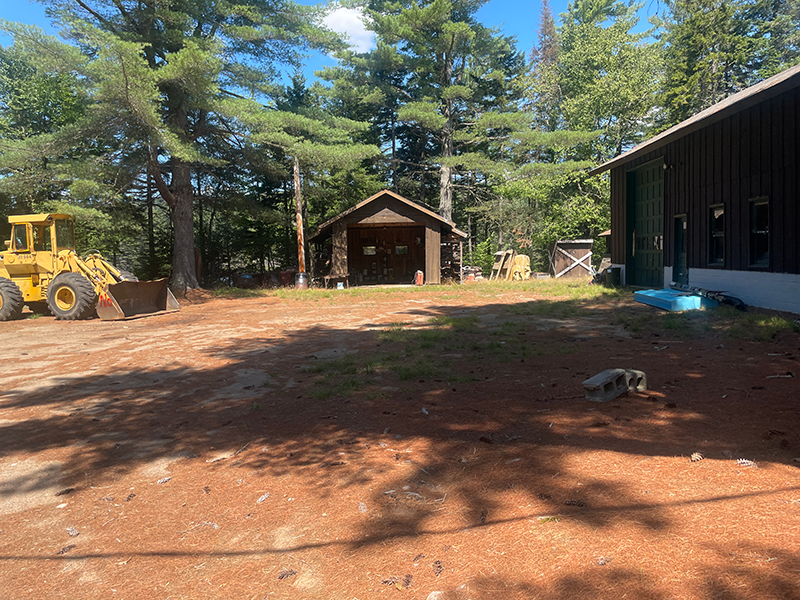
Top picture shows the canoe launching area and beach on Low’s Lake long used by the Scout camp. The middle picture shows on stretch of many miles of roads that exist on the tract. Above shows extensive buildings on the site. Extensive remediation and restoration will be needed to rewild this tract.
DEC has long identified the Sabattis Boy Scout Camp property on Low’s Lake as one of its highest conservation priorities for Region 6, which includes St. Lawrence, Jefferson, Lewis, Oneida, and Herkimer counties. The parcel is also recognized in New York State’s Open Space Conservation Plan for its scenic, recreational, and habitat values. This is the last remaining extensive private holding on Low’s Lake.
These purchases are the most significant land acquisitions in years and will provide tremendous long-term opportunities for public outdoor recreation, wildlife habitat, and open space protections for the Forever Wild Forest Preserve.