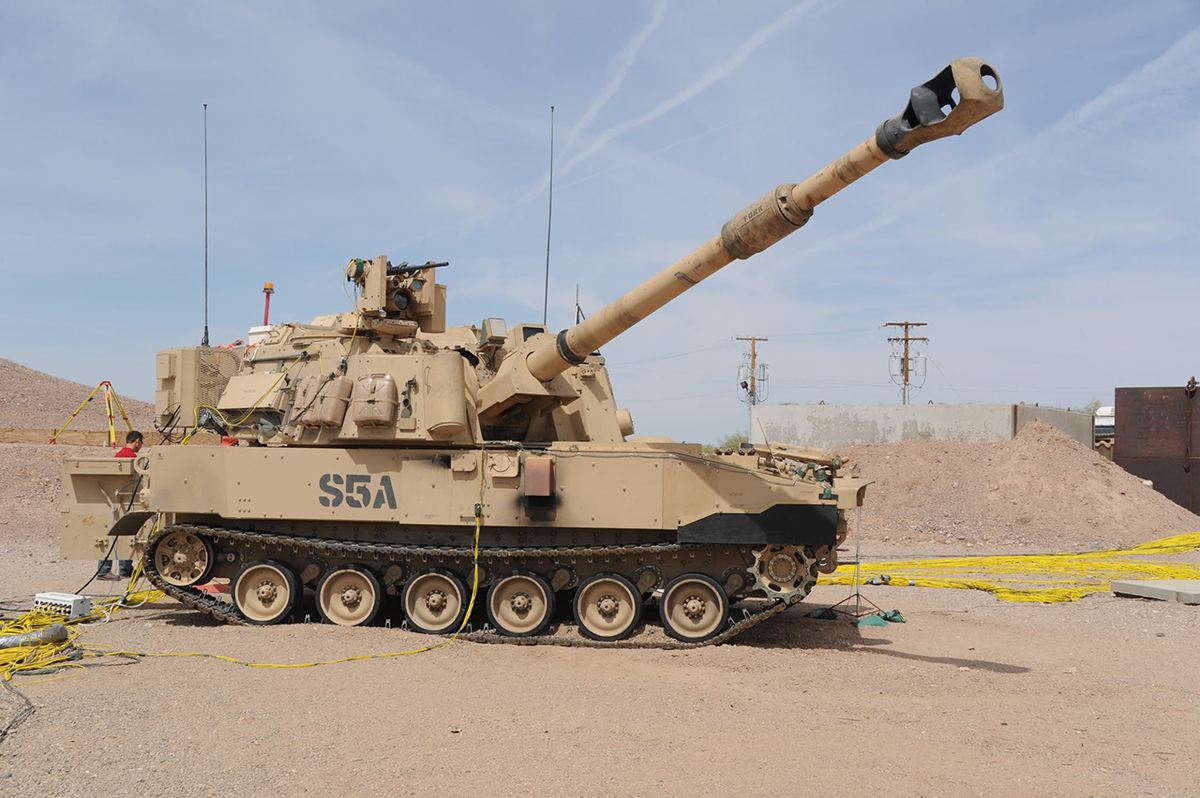
Nearly one year after the APA Board voted to send the proposed weapons firing range to an adjudicatory hearing, the Administrative Law Judge in charge of the hearing sends the matter back to the APA Board with a recommendation for denial of the project
Judge Issues Ruling to End Adjudicatory Public Hearing for Weapons Firing Range
In 2025, the Adirondack Park Agency (APA) Board required the proposed weapons firing range to undergo a formal adjudicatory public hearing. APA received over 1,400 public comments and all but 19 of those comments expressed concerns about the proposal to be sited in the Town of Lewis, Essex County. The howitzer firing range raises unique issues and has the potential to affect the natural, scenic, ecological, wildlife, recreational, and open space resources of the park, including but not limited to: potential discharges, residues, or other pollutants that may affect water, air and land resources; noise impacts produced by the howitzer testing range; unknown disruption to native and migrating wildlife and their habitats at or near the proposed project site considering species’ sensitivities; and the impacts to adjoining and nearby land uses, including but not limited to effects on the residents of the Town of Lewis, impact to property values in the area, the community character and quality of life of the residents of the Town of Lewis, and health and safety impacts relating to the howitzer testing range, and the operation, storage and transport of military equipment outside of a designated military-controlled area.
During the process of the adjudicatory hearing, the applicants for the proposed howitzer firing range failed to submit pre-filed testimony by the established deadline. Led by PROTECT’s Conservation Director and Counsel, Christopher Amato, the four environmental groups (Protect the Adirondacks, Adirondack Council, Adirondack Wild and Sierra Club) that intervened in the hearing made a motion to the Administrative Law Judge (ALJ) asking for the hearing to be concluded and the matter sent back to the APA Board for denial of the permit. APA hearing staff supported the motion noting that the applicant “has attempted to undermine the legitimacy of the hearing” and “has disregarded procedure without explanation or excuse”. In response to our motion, the applicants claimed that the intervening environmental groups should not be part of the hearing and that the whole process is preempted by federal jurisdiction. We worked with the other groups to submit our response in opposition to those arguments.
In a ruling dated September 14, 2026, the ALJ referred the matter back to the APA Board for final action on the application. The ALJ concluded that the applicants “violated the Scheduling Order, have not proceeded with the conduct of this hearing in good faith, and have failed to present evidence or address the hearing issues identified by the Agency Board and therefore failed to meet their burden to show that the Project Application meets the criteria for approval.” The ALJ recommends that the APA Board “deny the Project Application”. We will be pushing the APA Board to follow through with the ALJ’s recommendation to deny this inappropriate project proposal.
Weapons Firing Range Proposal
An application by Unconventional Concepts, Inc. (UCI) was submitted to the Adirondack Park Agency (APA) seeking approval to construct and operate a weapons ballistic firing range on a 197-acre parcel of land in the Town of Lewis (Essex County) classified as Rural Use on the Adirondack Park Land Use and Development Plan Map.
The proposed project involves the firing of a 155mm howitzer cannon—characterized by the Norwegian defense agency as “one of the noisiest weapons” in the Norwegian arsenal—up to 30 times per year over a five-year period. UCI proposes to fire this acoustically intrusive artillery in close proximity to scores of private residences, within 350 feet of the Taylor Pond Wild Forest, and in close proximity to the Jay Mountain Wilderness, and the Hurricane Mountain Wilderness. Incredibly, UCI proposes that Big Church Mountain be used as a “backstop” to potentially capture artillery shells fired by the howitzer at the target consisting of a metal shipping container filled with sand.
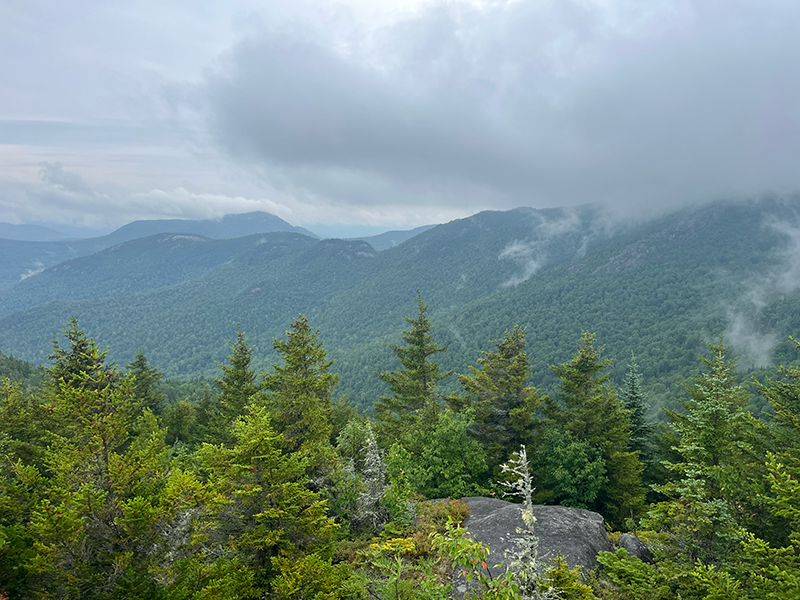
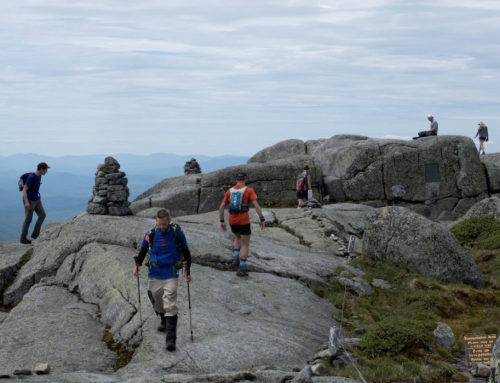
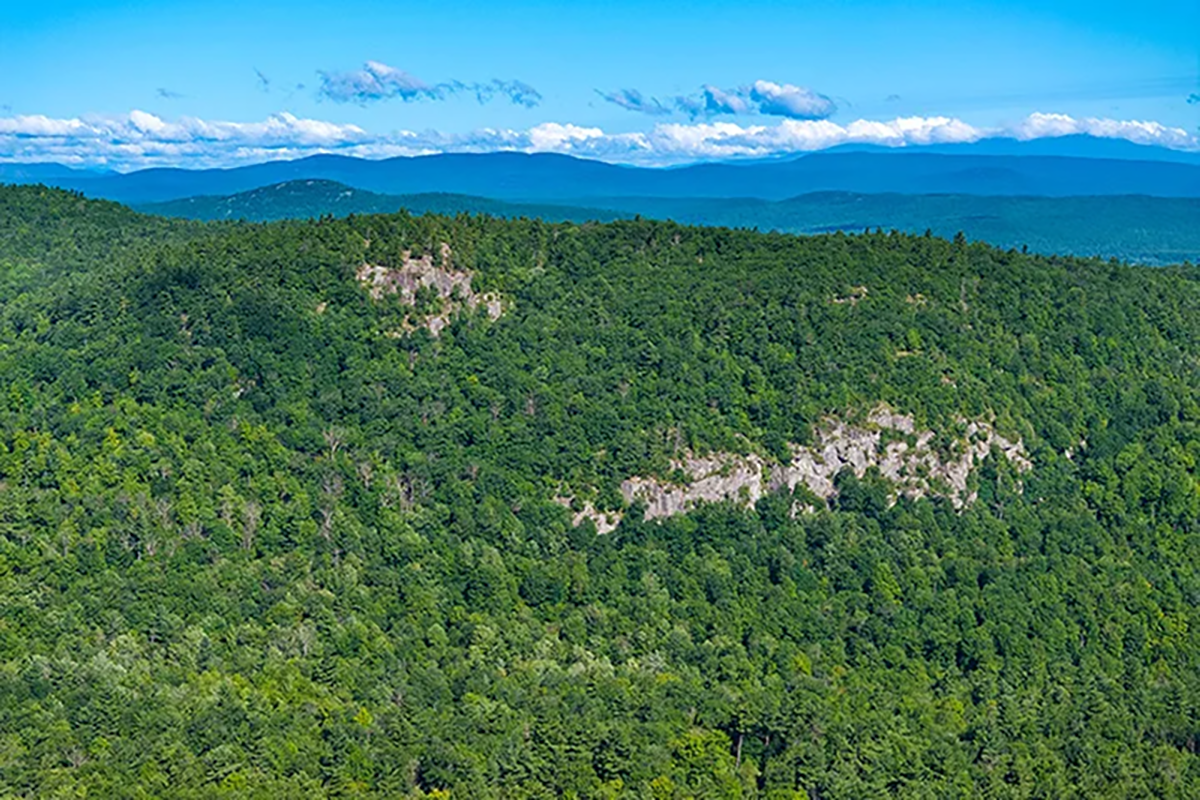
Jay Mountain Wilderness area
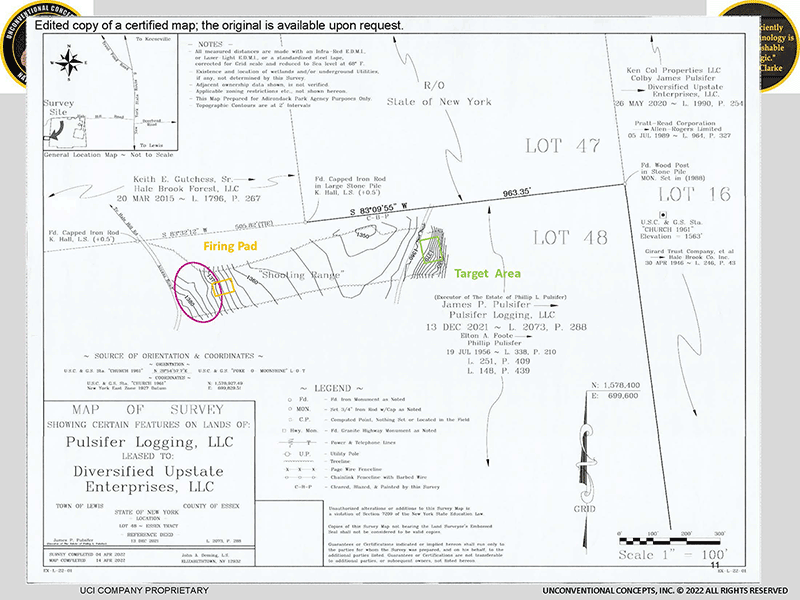
As proposed, a portable 155mm howitzer will be fired from a 100-foot by 100-foot crushed gravel pad, sending steel projectiles into a target area. The firing range will be longer than three football fields (330 yards). The howitzer will be fired up to 30 times per year on weekdays between the hours of 10 a.m. and 4 p.m. There may be as many as 10 hours of firings in a single week, and the testing is anticipated to continue for five years.
The project site is forested, includes streams and wetlands, and includes Little Church and Big Church mountains. The application states that the site has been chosen “because it provides easy access to mountains, which will act as a projectile backstop,” and that “[t]he current intent is that test shots will impact the mountain at the end of the range.”
There are 42 residences located within two miles of the project site. The site is also located in close proximity to sensitive Forest Preserve lands, including the Jay Mountain Wilderness Area (approximately 2.5 miles away), and the Hurricane Mountain Wilderness Area (approximately 4 miles away). The project site is also within two miles of four parcels of the Taylor Pond Wild Forest, with the closest parcel located approximately 350 feet from the proposed artillery firing pad.
Despite the applicants’ claim that this project is essential for the national security of the United States, and that the proposal will be preempted by federal jurisdiction, there is no evidence that the applicants are working for the federal government or have any kind of contract with the U.S. military for howitzer testing. Indeed, documentation that we obtained shows that the military found that it was too costly to conduct howitzer firing at the site in Lewis due to the safety and risk assessment needed as a result of the proximity of Route 9 and Interstate 87.
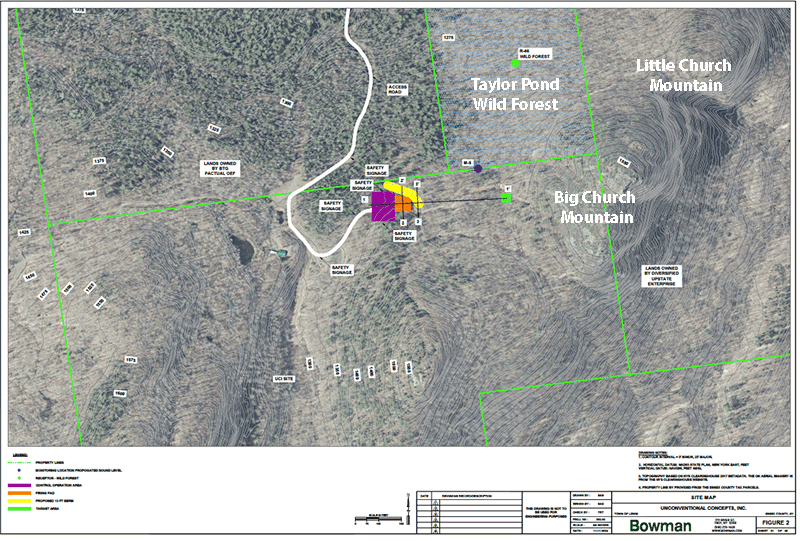
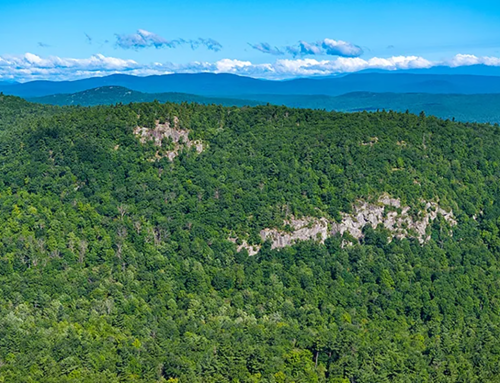
Big Church Mountain is the backstop for the firing range
Weapons Firing Range Has No Place in the Adirondack Park
A military weapons testing range has no place in the Adirondack Park. The proposed project is directly at odds with the purpose of the Adirondack Park and is also inconsistent with the statutory purposes and policies applicable to Rural Use areas.
The siting of a military artillery testing range is, on its face, inconsistent with the character of the Adirondack Park, which “is abundant in natural resources and open space unique to New York and the eastern United States.” Executive Law § 801. The proposed project is utterly out of character with “[t]he wild forest, water, wildlife and aesthetic resources of the park and its open space character.” Executive Law § 801. Furthermore, an artillery testing range does not “complement[] the forest preserve holdings” or provide “supporting facilities necessary to the proper use and enjoyment of the unique wild forest atmosphere of the park.” Executive Law § 801. Indeed, it is difficult to imagine a use more directly at odds with the Adirondack Park’s wild forest atmosphere.
The inappropriateness of locating the proposed project within Park boundaries is underscored by the fact that a military artillery testing range is not listed as either a primary or secondary compatible use for Rural Use (or for any land classification). See Executive Law § 805(3)(f)(4). The proposed project is therefore a presumptively incompatible use for Rural Use areas. Id. § 805(3)(a).
Although the proposed project is styled as a “commercial use,” which are listed as a secondary compatible use in Rural Use areas, it is far from a typical commercial use because it does not involve the sale or rental of goods, services or commodities and will not provide recreation facilities or activities. See Executive Law § 802(17) (defining “commercial use” as “any use involving the sale or rental or distribution of goods, services or commodities, either retail or wholesale, or the provision of recreation facilities or activities for a fee other than any such uses specifically listed on any of the classification of compatible uses lists.”). Therefore, the proposed project is not compatible with a Rural Use area.
In any event, the incompatibility of the proposed project with the Rural Use classification is made clear by the APA Act. A Rural Use area is one “where natural resource limitations and public considerations necessitate fairly stringent development constraints . . . [and is] characterize[d] by substantial acreages of one or more of the following: fairly shallow soils, relatively severe slopes, significant ecotones, critical wildlife habitats, proximity to scenic vistas or key public lands.” Executive Law § 805(3)(f)(1). In addition, Rural Use areas “are characterized by a low level of development and variety of rural uses that are generally compatible with the protection of the relatively intolerant natural resources and the preservation of open space . . [and] provide the essential open space atmosphere that characterizes the park.” Executive Law § 805(3)(f)(1). A military testing range involving the booming discharge of artillery shells into the side of a mountain will not protect natural resources and will destroy the open space atmosphere that is “essential and basic to the unique character of” the Adirondack Park. Executive Law § 805(3)(f)(2).
Military Activities at the Old Missile Silo Site
During the summer of 2026, the site visit that was going to take place for the parties to the adjudicatory hearing to examine the proposed howitzer firing range was cancelled by the applicants. We particularly wanted to see the “silo site” where the howitzer and associated equipment are proposed to be stored and where the applicant stated that “preparation, support, and data collection” would occur. However, the applicants inexplicably claim that the silo site is not part of the project.
The silo site is where military-style training has previously taken place including drone testing, automatic weapons fire and low-flying helicopters. We believe these activities violate the site’s current APA permit that allows for 14 temporary storage tents. We are urging APA to investigate these apparent violations and take enforcement action.