
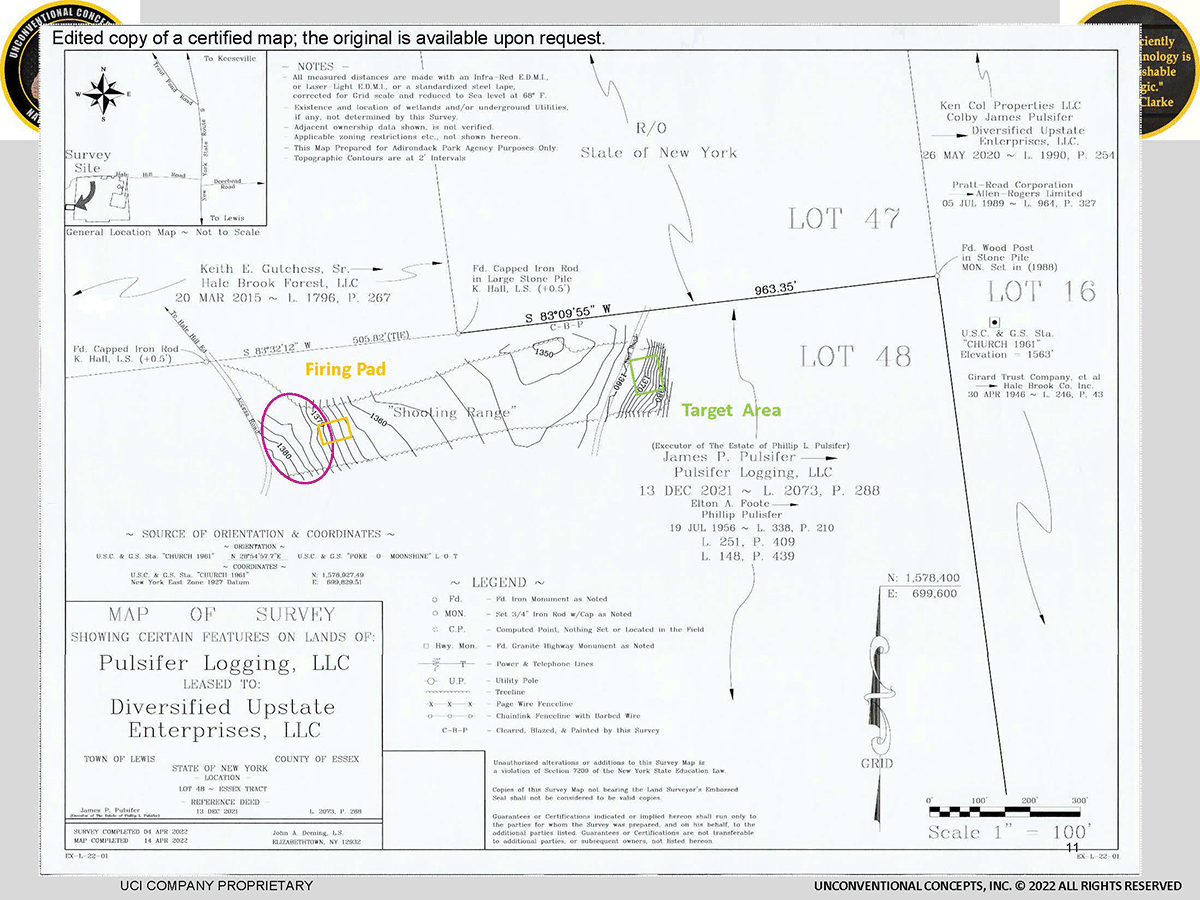
One year after the APA Board voted to send the proposed weapons firing range to an adjudicatory hearing, the APA Board voted to deny the project
APA Board’s Decision to Deny Proposed Howitzer Testing Range
In a major victory for Protect the Adirondacks (Protect) and other Adirondack environmental organizations, the Adirondack Park Agency (APA) Board voted at its meeting on November 20, 2026 to dismiss the adjudicatory hearing for a proposed howitzer firing range in the Town of Lewis, Essex County, in the Adirondack Park. The APA’s decision was in response to a motion to dismiss the hearing and deny the application made by Protect the Adirondacks’ Conservation Director and Counsel, Christopher Amato. The motion was joined by three other environmental groups that intervened in the hearing.
In the motion, Protect and the other environmental organizations (jointly referred to as “Intervenors”) argued that the applicants’ failure to comply with the scheduling order issued by the Administrative Law Judge (ALJ), including the applicants’ failure to submit pre-filed testimony in support of the application by the established deadline, warranted dismissal of the proceeding and referral of the application back to the APA Board for final action. The ALJ granted the motion and referred the application to the APA Board with a recommendation that the proceeding be dismissed and that the application be denied due to the applicants’ failure to submit any evidence in support of the application.
ALJ Greenwood, in a ruling dated September 14, 2026, found that the applicants:
“have violated the Scheduling Order, have not proceeded with the conduct of this hearing in good faith, and have failed to present evidence or address the hearing issues identified by the Agency Board and therefore failed to meet their burden to show that the Project Application meets the criteria for approval.”
In a lengthy presentation to the APA Board during a meeting of the Regulatory Programs Committee on November 19, 2026, APA’s General Counsel Matthew Robinson-Loffler described the facts leading up to Intervenors’ joint motion, as well as the applicants’ response to the motion to the motion to dismiss the hearing. The applicants’ response was to argue that the Intervenors should be removed from the administrative proceeding. The ALJ had denied that request in the September 2026 ruling. APA’s General Counsel also explained other options that the APA Board could consider such as requiring the hearing to continue. The Regulatory Programs Committee voted to recommend that the full APA Board dismiss the hearing and deny the proposed project.
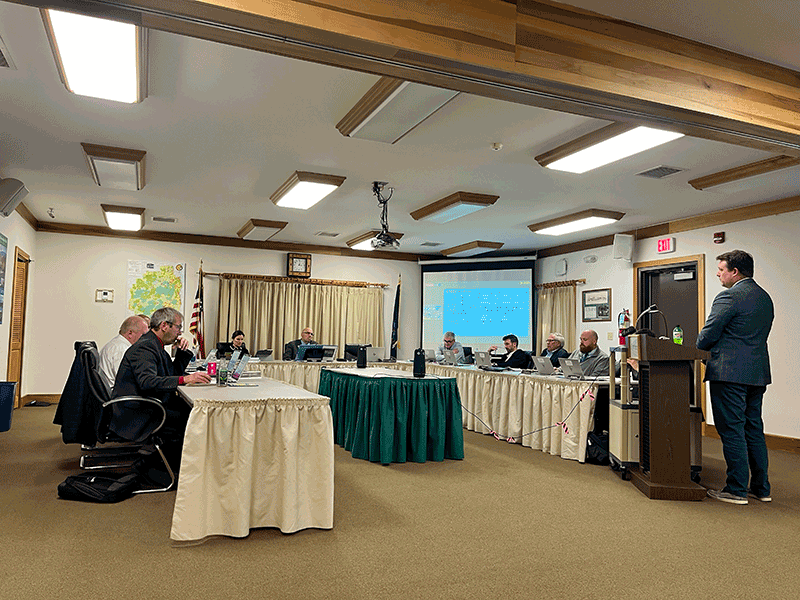
Regulatory Programs Committee listens to presentation by APA General Counsel
The full APA Board then voted on November 20, 2026, in accordance with the committee’s recommendation, to the dismiss the adjudicatory hearing and deny the proposed project as requested in Intervenors’ joint motion. The APA Board Members discussed that the applicants have failed to provide the requested information to APA, and that without the information the project could be denied. The APA Board Members affirmed that the applicants were given an opportunity to be heard, but the applicant declined to take part in the process and failed to provide a valid reason for not submitting pre-filed testimony in the proceeding. The vote to deny was unanimous.
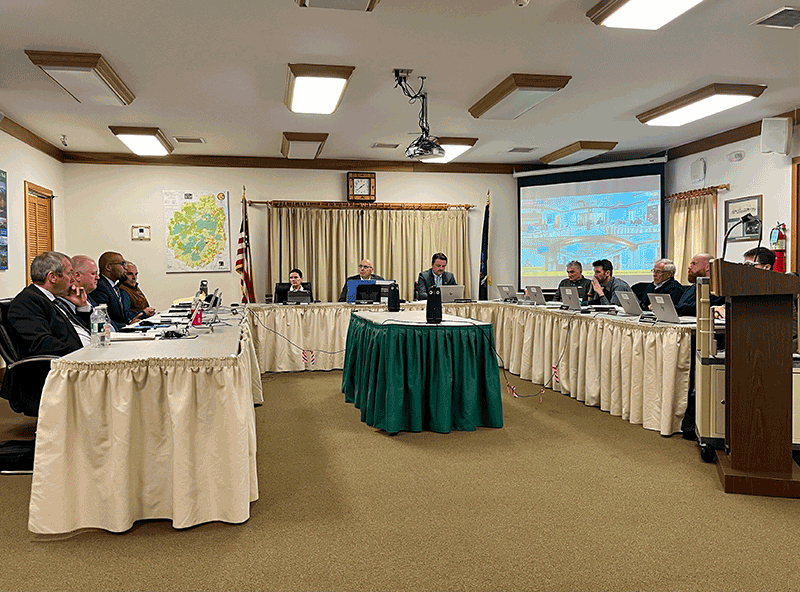
APA Board votes to deny proposed howitzer testing project in Town of Lewis, Essex County
“Throughout the proceeding, the applicants demonstrated a clear disdain for the ALJ, the APA staff, the intervenors, and for the conduct of a fair and orderly proceeding. The final straw was the applicants’ failure to submit pre-filed testimony by the established deadline and their failure to provide any justification for that failure” said Christopher Amato, Conservation Director and Counsel of Protect the Adirondacks. “The Board made the right call by ending the proceeding and denying the application. The simple fact is that the proposed artillery firing range has no place in the Adirondack Park.”
“The applicant was not taking the proceeding seriously and clearly sought to avoid scrutiny of its project. We applaud the APA Board for taking this step to end the adjudicatory hearing and deny the project,” said Claudia Braymer, Executive Director of Protect the Adirondacks. “Had the hearing proceeded, the outcome would have been denial because this proposal was not compatible with the Adirondack Park due to its significant adverse impacts on the natural and human communities of the Adirondacks.”
“The APA staff were putting in the work to ensure that the APA Board had a record upon which it could base its decision. Here, the applicant, who is the one with the burden to prove its project can be approved by the Board, failed to provide basic information in support of its application. The APA Board was absolutely justified in dismissing the hearing and denying the project,” said Barbara Rottier, Chair of the Board of Directors of Protect the Adirondacks.
Community Opposition to Weapons Firing Range Proposal
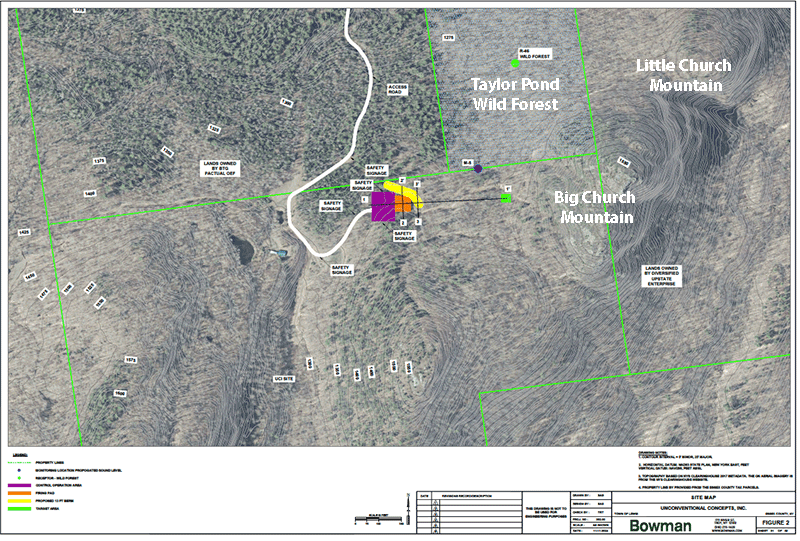
The application by Michael Hopmeier and Unconventional Concepts, Inc. was submitted to APA for approval to construct and operate a howitzer testing range on private land classified as Rural Use on the Adirondack Park Land Use and Development Plan Map. The proposal would have involved the firing of a 155mm howitzer cannon up to 30 times per year over a five-year period. The proposed location for firing this excessively loud artillery is in close proximity to scores of private residences, within 350 feet of the Taylor Pond Wild Forest, and near the Jay Mountain and Hurricane Mountain Wilderness Areas. The applicants had claimed that the project is essential for the national security of the United States, but failed to produce evidence of any contract with the United States military or any other governmental entity to conduct the testing that it proposed.
The proposed project met with substantial community opposition. A petition of opposition was filed with APA.

Jay Mountain Wilderness area
Activities at the Old Missile Silo Site Continue to Raise Concerns
Residents are also concerned about the applicants’ activities conducted at the old missile silo site owned by the applicants. In September 2025, the applicants conducted military training exercises, called Operation Jaded Thunder, that included drone testing, automatic weapons fire and low-flying helicopters—none of which we believe are authorized by the existing permit.
We believe these activities violate the site’s current APA Permit that allows for 14 temporary storage tents. We are urging APA to investigate these apparent violations and take enforcement action.
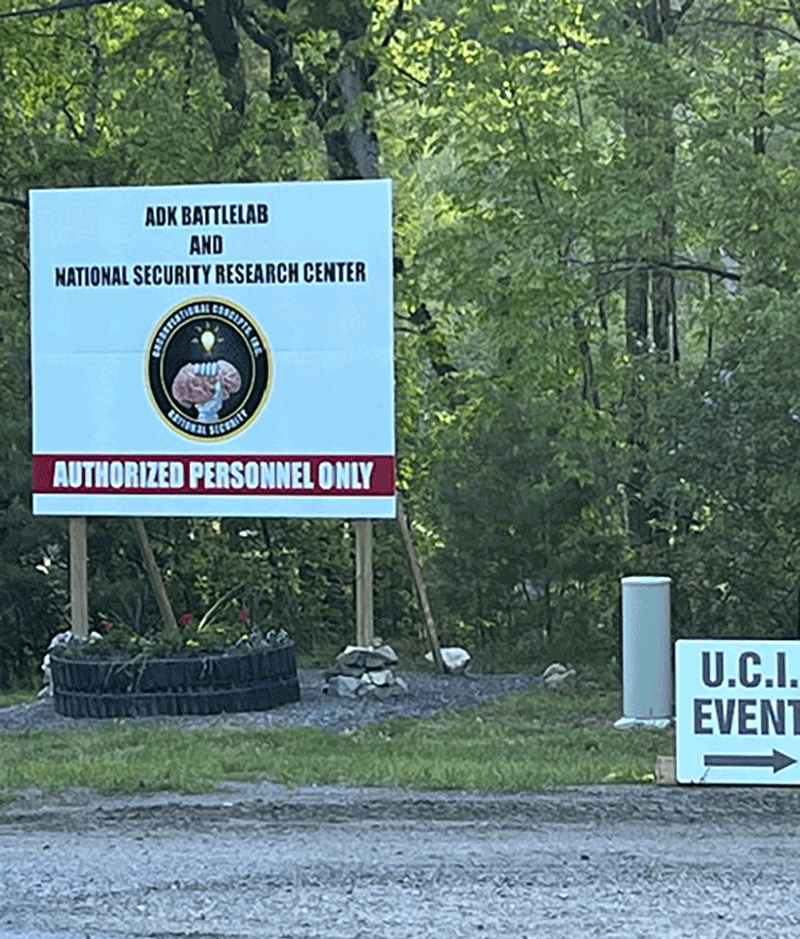
Unconventional Concepts’ activities include automatic weapons firing, and flying drones and helicopters